


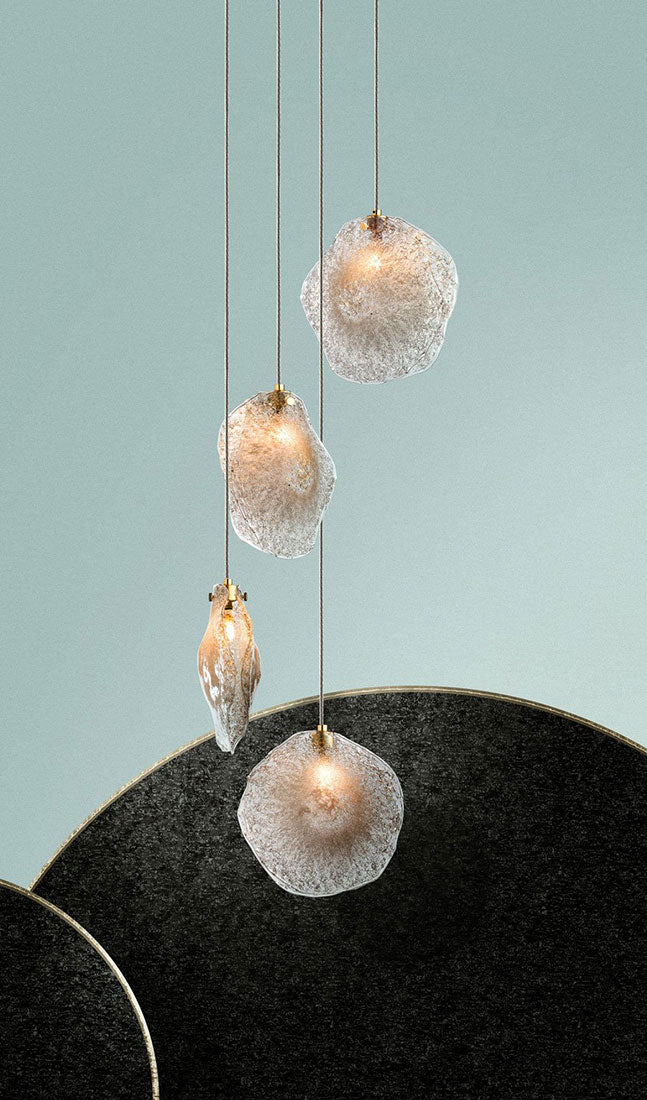


Bespoke lighting solutions for residential interiors are designed around the architecture, proportions, materials, and daily use of a specific home. Rather than selecting a fixture only by style or dimensions, custom lighting considers how the piece relates to ceiling height, furniture placement, sightlines, finishes, and the atmosphere of each room.
Shakúff works with homeowners and interior design studios to develop handcrafted lighting for high-end residential spaces. Its collections span chandeliers, pendants, sconces, floor lamps, and table lamps, with customization available across different colors, finishes, sizes, and configurations depending on the design.
Why Bespoke Lighting Works Differently in a Home
Residential lighting needs to perform several roles at once.
It helps people move safely through a space, supports activities such as reading and dining, creates atmosphere after dark, and contributes to the overall interior composition. The Illuminating Engineering Society specifically addresses the varied visual tasks and lighting needs found in residential environments, while residential lighting guidance commonly separates illumination into ambient, task, and accent layers.
Bespoke lighting adds another consideration: the fixture itself can be designed as part of the architecture.
A chandelier can reinforce the proportions of a dining room. A vertical pendant composition can connect multiple levels of a staircase. Wall sconces can add lower-level illumination while creating rhythm along a hallway.
Instead of filling every room with statement fixtures, custom design allows each piece to serve a clear purpose.
Start With the Architecture, Not the Fixture
The strongest residential lighting schemes begin by studying the room.
Ceiling height, room dimensions, beams, windows, furniture, electrical locations, circulation paths, and viewing angles all influence the appropriate fixture.
This approach is built into Shakúff's custom lighting process. The discovery stage considers aesthetic preferences alongside site-specific details such as structural beams, lift systems, finishes, and electrical requirements before the design is developed further.
For a double-height foyer, this might result in a vertical chandelier composed of multiple pendants. For a dining area, the composition might instead spread horizontally to relate more closely to the table.
The objective is not simply to find enough space for the light. The lighting should reinforce the proportions and movement of the architecture.
Use Chandeliers to Define Important Residential Spaces
A chandelier naturally establishes hierarchy within an interior.
In open-plan homes, it can identify the dining area without adding walls or partitions. In a large living room, it can visually connect a tall ceiling with the furniture below. In an entryway, it can create a focal point visible from several viewpoints.
Shakúff's hand-blown glass chandelier collection includes customizable designs using different glass colors, finishes, sizes, and compositions. Multi-pendant pieces are particularly useful in residential projects because the arrangement can be adjusted to interact with the dimensions of the space.
This flexibility allows scale to come from repetition rather than a single heavy object.
Transparent or textured glass pendants can occupy significant volume while preserving views through the fixture, an important consideration in homes with large windows, artwork, or open circulation between rooms.
Adapt Pendant Lighting to Kitchens and Dining Areas
Pendant lighting becomes especially useful where the architecture and furniture create a clear axis.
Kitchen islands, breakfast areas, dining tables, and stairwells can all benefit from individually suspended fixtures or multi-pendant compositions.
The Kadur Drizzle design language is particularly adaptable. Individual pendants use concentric glass spheres with drizzled glass fibers enclosed within the outer orb, while fixtures can be expanded into larger multi-pendant compositions. A single Kadur Drizzle pendant is available in multiple glass sizes, and the collection can be customized according to the project.
For residential interiors, this means the same glass language can move from a restrained grouping above a kitchen island to a more dramatic chandelier in an adjacent living space.
Continuity comes from material and form rather than simply repeating identical fixtures.
Bring Lighting Down to the Human Scale
Not every lighting decision should happen at the ceiling.
High-quality residential interiors benefit from fixtures at several heights. Sconces can illuminate corridors, bedrooms, living areas, and architectural walls, while table and floor lamps bring light closer to seating.
The U.S. Department of Energy describes ambient, task, and accent lighting as distinct layers that address different needs within a home.
Shakúff's collections support this layered approach. The Nimbus collection, for example, is available in chandelier, pendant, and sconce configurations. Its glass can be specified in clear or frost options, while material finishes include brushed brass, brushed nickel, antique bronze, and other choices.
Using related materials at different heights can create visual continuity without making a home feel overly coordinated.
Let Materiality Shape the Atmosphere
Bespoke lighting is not only about fixture dimensions. Materials determine how the piece interacts with the rest of the interior.
Hand-blown glass may appear transparent, softly diffused, deeply textured, or visually dense depending on the treatment. Metal finishes can add warmth or contrast, while the relationship between glass and surrounding stone, timber, plaster, or upholstery can change the overall character of the room.
Shakúff's Tamar collection uses elongated handcrafted glass forms and offers metal finish options including brushed brass, brushed nickel, antique bronze, matte silver, and matte white. Fixtures can also be made with wires or rods and arranged at similar or staggered heights.
These decisions matter because a bespoke fixture should not be selected in isolation. Its finish should either complement or deliberately contrast with the materials already defining the room.
Consider Handmade Variation as Part of the Design
One of the distinctions between handcrafted and industrial lighting is variation.
Shakúff notes that because its glass is handmade and hand-blown, differences in size, color, shape, and texture are inherent to the material. Its chandelier collection also identifies characteristics such as bubbles, fissures, crackling, and crazing as natural aspects of the handcrafted glass.
In a residential setting, these differences can prevent a multi-pendant installation from feeling mechanically repetitive.
A group of similar glass forms can still maintain visual consistency through scale, color, canopy configuration, and arrangement while allowing each handmade component to retain its own subtle character.
This balance between repetition and individuality is particularly effective in interiors where craftsmanship and material authenticity are important parts of the design language.
Plan Custom Lighting Early in the Interior Design Process
Bespoke lighting is easier to integrate when it is considered before construction and finishing decisions are complete.
Large chandeliers may affect ceiling reinforcement, electrical positioning, canopy placement, access, and suspension requirements. Wall fixtures need to coordinate with furniture heights and architectural details. Long-drop installations may require careful consideration of both ground-floor and upper-level sightlines.
Shakúff's process moves from discovery into design and appraisal, where engineers develop a structurally considered proposal and 3D rendering before fabrication begins.
Early coordination gives designers more freedom because lighting can be treated as part of the room rather than a decorative object that must fit around decisions already made.
The result is often quieter and more resolved.
Explore Shakúff's handcrafted lighting collections or begin a custom project to create a bespoke residential fixture developed around your home's architecture, proportions, materials, and design vision.
Frequently Asked Questions
What is bespoke residential lighting?
Bespoke residential lighting is designed or customized around the requirements of a particular home. The process can consider fixture dimensions, glass color, material finishes, suspension length, pendant quantity, ceiling conditions, electrical requirements, and architectural proportions rather than relying entirely on a predetermined standard fixture.
Which rooms benefit most from custom lighting?
Custom lighting can be valuable anywhere standard fixture proportions are limiting. Double-height foyers, dining rooms, staircases, kitchens with large islands, vaulted living spaces, and rooms with unusual ceiling conditions are particularly strong candidates because scale and placement often need to respond closely to the architecture.
Can different Shakúff fixtures be coordinated throughout one home?
Yes. Shakúff offers collections across chandeliers, pendants, sconces, floor lamps, and table lamps. Designers can create continuity by repeating glass characteristics, finishes, or related forms while selecting fixture types and dimensions appropriate to each room.
Does bespoke lighting need to be visually dramatic?
No. Bespoke does not necessarily mean oversized or highly decorative. A custom fixture may be visually restrained but precisely proportioned to a room. Adjusting suspension length, glass scale, finish, or pendant spacing can create a highly tailored result without making the lighting the dominant feature of the interior.
When should bespoke lighting be specified for a residential project?
Ideally, it should be discussed during the design or renovation stage before ceiling, electrical, and structural work is finalized. Early planning makes it easier to coordinate mounting locations, electrical requirements, suspension, fixture scale, installation access, and the relationship between the lighting and surrounding furniture or architecture.