


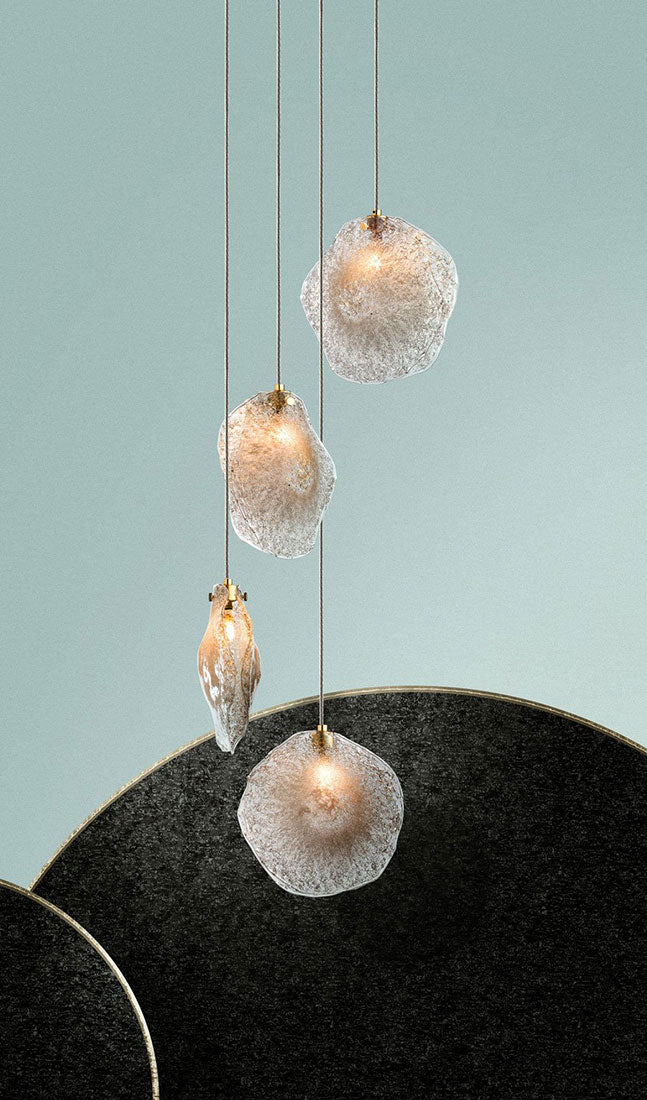


The selection of a hand-blown glass light fixture is an investment in art, texture, and architectural atmosphere. Whether it features a cascading cluster of textured drops or a singular, monolithic pendant, artisan glass possesses a unique capability to bend, refract, and amplify light. However, the physical fixture is only one half of the illumination equation. The bulb placed inside that glass acts as the engine of the entire presentation.
An incorrect bulb choice can instantly flatten the rich depth of colored glass, introduce an uncomfortable green or cold blue tint, or create a blinding point of glare that obscures the craftsmanship of the fixture itself. Conversely, selecting a bulb with the correct technical specifications ensures that the glass glows with its intended warmth and clarity.
Navigating the intersection of color temperature, lumen output, dimming compatibility, and filament style is essential for anyone looking to maximize the beauty and utility of custom glass lighting.
The Core Technical Metric: Color Temperature (Kelvin)
Color temperature is measured on the Kelvin (K) scale, tracking the perceived warmth or coolness of a light source. For residential and premium commercial spaces, this choice dictates the emotional resonance and functional clarity of a room.

The Kelvin rating of a bulb interacts directly with chemical colorants embedded within hand-crafted glass matrices.
When pairing bulbs with artisan glass, the Kelvin rating must be selected with extreme care, as it interacts directly with the chemical colorants inside the glass matrix.
Kelvin Scale and Environmental Mood
| Color Temperature Range | Environmental Mood & Spatial Application |
|---|---|
| 2200K - 2400K (Candlelight) | Ultra-warm, intimate, vintage ambiance; accents organic glass flaws beautifully. |
| 2700K (Warm White) | Standard residential comfort; relaxing tone well-suited for living rooms. |
| 3000K (Soft White) | Clean, transitional balance; ideal for crisp architectural lines and kitchens. |
| 4000K+ (Daylight) | High contrast, clinical clarity; reserved strictly for functional task spaces. |
The Power of Ultra-Warm Temperatures (2200K to 2400K)
Bulbs operating within the 2200K to 2400K range emit a deeply golden, amber light reminiscent of traditional gas lamps or candlelight. This spectrum is highly effective when paired with clear, seeded, or amber glass fixtures. The low Kelvin rating enhances the organic imperfections within hand-blown pieces, drawing attention to micro-bubbles, ridges, and internal textures without straining the eyes. This temperature is best suited for spaces dedicated to rest and socialization, such as dining rooms, formal living spaces, and bedrooms.
The Balancing Act of Standard Warmth (2700K to 3000K)
A temperature of 2700K is considered the benchmark for traditional residential lighting, offering a balanced, creamy warmth that feels inviting yet highly functional. Moving upward to 3000K shifts the light into a crisper, cleaner profile.
According to architectural lighting documentation from the U.S. General Services Administration, maintaining a consistent color temperature across a single visual plane is crucial for preventing ocular fatigue and keeping spatial design cohesive. If your space features cool gray walls, sleek marble, or modern minimalist elements, a 3000K bulb ensures the light feels clean without sliding into a clinical, blue-toned territory.
Color Rendering Index (CRI) and Its Impact on Colored Glass
The behavior of colored glass is entirely dependent on the spectral quality of the bulb illuminating it. This quality is measured via the Color Rendering Index (CRI), a scale ranging from 0 to 100 that dictates how accurately a light source reveals the true colors of objects compared to natural daylight.
For hand-blown glass fixtures featuring rich pigments like topaz, ruby, cobalt, or smoky quartz, choosing a bulb with a high CRI rating (90 or above) is non-negotiable. Low-CRI bulbs emit a restricted spectrum of light, which often causes vibrant glass colors to appear muddy, washed out, or grayish. A high-CRI bulb ensures that the full depth of the artisan dye is activated, allowing the glass to radiate with saturated accuracy.
Architectural Fluidity: Mastering the Art of Dimming
A custom light fixture should be capable of adapting to the shifting requirements of a room throughout the day. A kitchen island fixture may need to deliver bright, focused illumination during morning meal preparation, yet shift to a soft, atmospheric glow during an evening gathering. Achieving this flexibility requires a deep understanding of modern dimming systems.

Flawless low-end dimming control transforms custom installations from crisp task areas into intimate focal sanctuaries.
The Technical Challenge of LED Dimming
The transition from incandescent bulbs to energy-efficient LED technology has significantly lowered household energy footprints, a priority supported by sustainable build guidelines from organizations like the U.S. Green Building Council. However, LEDs operate on solid-state electronics, making their dimming mechanisms far more complex than the simple voltage-reduction methods used for vintage filaments.
To achieve smooth, flicker-free dimming, you must ensure your bulbs are explicitly labeled as dimmable and are paired with a compatible dimmer switch. The two primary residential dimming technologies are:
- Forward-Phase (TRIAC): Traditionally used for older incandescent bulbs but updated for many modern LED lines; standard compatibility, budget-friendly, prone to low-end buzz.
- Reverse-Phase (ELV - Electronic Low Voltage): Highly recommended for premium LED fixtures, offering quieter operation and smoother dimming curves down to low light levels.
Using an incompatible dimmer switch can lead to a persistent, low-frequency buzzing sound or cause the light to flash or drop out entirely when lowered. Ensuring system compatibility protects both the internal driver of the bulb and the peace of your living environment.
Warm-Dim Technology: Replicating the Filament Legacy
One historical advantage of traditional incandescent bulbs was their ability to naturally drop in color temperature as they were dimmed; a standard bulb would shift from a bright 2700K down to a rich, glowing 2000K at its lowest setting.
Modern Warm-Dim LED technology successfully replicates this behavior. As you lower the dimming slider, internal circuitry automatically shifts the Kelvin output downward. This allows a singular glass installation to transition effortlessly from clean, functional daytime task lighting to a rich, smoldering evening accent.
Managing Glow, Diffusion, and Glare
The physical shape and finish of the bulb directly impact how light distributes across the surface of a glass fixture. The goal is often to create an even, mesmerizing glow rather than an intense, blinding point of light.
Transparent Glass vs. Visible Filaments
When dealing with completely clear or highly transparent seeded glass, the internal bulb is entirely visible to the naked eye. In these scenarios, standard white plastic LED bulbs disrupt the luxury aesthetic of a handcrafted fixture.
Instead, opt for LED filament bulbs (often called Edison bulbs). These utilize micro-LED arrays configured into linear paths that mimic vintage carbon filaments. They provide the structural beauty of antique lighting design while operating with the efficiency, cool temperatures, and lifespan of modern solid-state technology.
Textured Glass and Internal Frosting
If your custom installation utilizes frosted, etched, or heavily sandblasted glass, the material itself acts as an external diffuser. Research from the Lighting Research Center demonstrates that utilizing frosted glass surfaces effectively scatters intense light rays, significantly reducing glare and softening distinct shadow lines.
When illuminating frosted glass, using a pearl or frosted bulb inside creates a perfectly uniform, cloud-like orb of light. This combination eliminates any internal hot-spots, ensuring the entire glass silhouette lights up with equal intensity.
Choosing the Right Bulb for Specific Shakúff Collections
Configuring the perfect pairing of glass and bulb is an art form that studios like Shakúff Luxury Lighting have refined through years of custom architectural design. Looking across their various collections, different glass styles demand distinct bulb profiles to realize their potential.

Strategic bulb geometries ensure vertical glass structures are evenly lit without clustering harsh light points.
Linear Elements and the Kadur Collection
For fixtures utilizing the clean, spherical geometries of the Kadur Collection, maintaining an even, interior glow is paramount. Because these spheres often feature internal drizzle textures or frosted treatments, pairing them with compact, omnidirectional G9 or G4 LED capsules ensures that light pushes outward evenly in a 360-degree radius, emphasizing the round geometry without creating dark corners inside the glass.
Cascading Artistry: Pendant Configurations
When designing a sweeping, multi-tiered custom chandelier or arranging individual pendant lights over a focal point, the choice of bulb shape dictates how the installation interfaces with the rest of the architecture. Elongated, tubular bulbs (such as T10 or T30 shapes) fit beautifully within narrow, hand-blown glass cylinders, distributing light evenly along the vertical length of the glass rather than clustering it at the base.
Balancing Light Output (Lumens) with Aesthetic Goals
A common mistake in interior design is purchasing bulbs based purely on wattage. Wattage tracks energy consumption, whereas lumens measure actual light output. When outfitting a multi-bulb glass fixture, summing the total lumens is crucial for avoiding over-illumination.
For a dining space, a total cluster output of 1,500 to 3,000 lumens is generally sufficient, provided it is managed by a quality dimmer. By focusing on lumen distribution rather than raw power, you preserve the subtle nuances of the glasswork while providing enough ambient illumination to satisfy the functional demands of the space.
If you are ready to perfect the illumination, color rendering, and dimming performance of your custom glass installation, the design experts at Shakúff are available to guide you through every technical step. Connect with our dedicated design consultation team today to explore how our tailored lighting configurations and curated bulb recommendations can bring your unique architectural vision into a warm, flawless reality.