


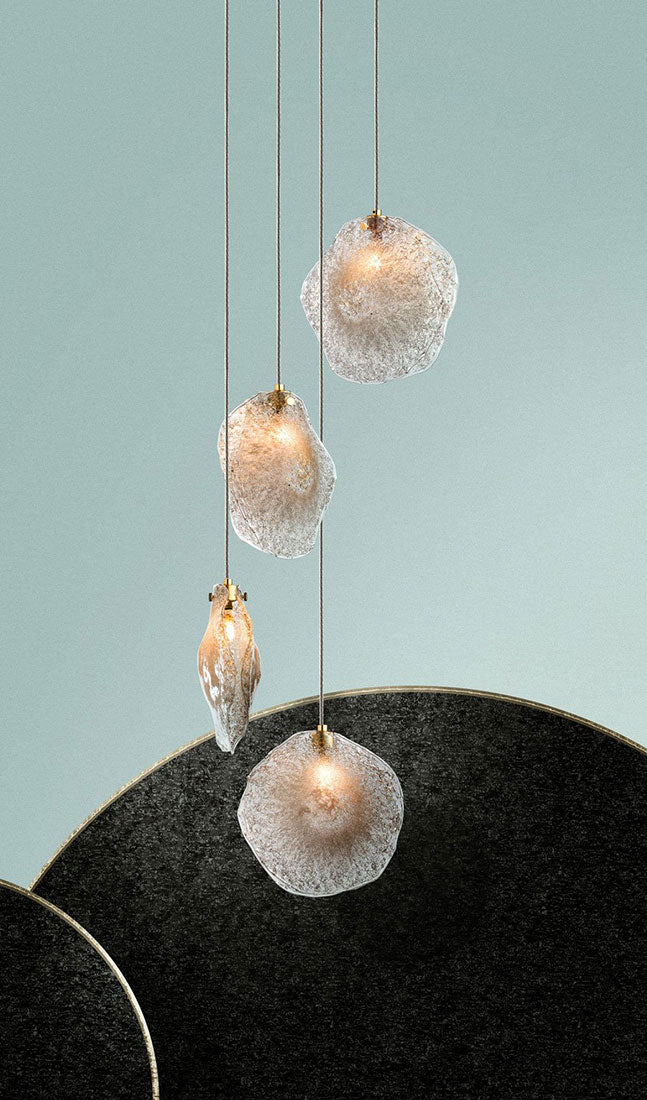


Custom commercial lighting design for boutique hotels should do more than illuminate a building. It should support wayfinding, define atmosphere, reinforce the property's design identity, and help different spaces feel connected without becoming repetitive.
Boutique hotels are especially suited to bespoke lighting because their interiors often rely on a distinct visual language. A sculptural chandelier in the lobby, carefully placed pendants in a restaurant, and quieter sconces along guest corridors can all contribute to that identity while serving different functional needs.
Shakúff's handcrafted glass collections are customizable across colors, finishes, sizes, and configurations depending on the design, making them suitable for hospitality projects where standard fixtures may not respond well to the architecture.
Start With the Guest Experience, Not a Fixture List
Hotel lighting is experienced as a sequence.
Guests arrive at the exterior, move through the lobby, approach reception, travel along corridors, enter guestrooms, visit restaurants or lounges, and eventually return to more private areas. Each zone requires a different balance of visibility, comfort, atmosphere, and visual emphasis.
The Illuminating Engineering Society's guidance for hospitality environments treats hotel lighting as an integrated system of layers while recognizing that areas such as lobbies, corridors, guestrooms, restaurants, spas, and other spaces have different lighting needs.
For a boutique property, custom decorative fixtures should therefore be part of the broader lighting plan rather than expected to solve every requirement independently.
A chandelier may establish the visual identity of the lobby, while architectural lighting handles general illumination and smaller decorative fixtures introduce warmth closer to guests.
Create a Memorable Arrival With a Custom Lobby Chandelier
The lobby is often the strongest opportunity for a bespoke statement piece.
Tall ceilings, feature staircases, reception desks, and open lounge areas can support a larger installation that immediately communicates the hotel's design character. The key is choosing scale and composition according to the architecture rather than simply selecting the largest available chandelier.
Shakúff's custom glass chandeliers use repeated hand-blown glass elements to create multi-pendant compositions. The studio notes that its chandelier designs can be customized through different colors, finishes, and sizes depending on the collection or product.
This flexibility is useful in hospitality interiors because the chandelier can respond to a particular ceiling height, floor plan, or viewing angle.
In a double-height lobby, for example, a vertical arrangement can occupy the open volume without creating a solid visual barrier. In a wider reception space, a broader composition can help establish a central gathering zone.
Use Pendant Lighting to Define Restaurants and Lounges
Boutique hotels often contain several hospitality experiences within the same property.
A restaurant may need a warmer and more intimate atmosphere than the lobby. A bar may require lower, more concentrated lighting. A breakfast area could benefit from a brighter but still visually distinctive arrangement.
Shakúff's hand-blown glass pendant collection provides a useful format for these spaces because individual pendants can create localized visual emphasis without requiring a large chandelier.
Repeating pendants above a bar or dining counter can establish rhythm, while a smaller cluster can help define a particular seating area within an open floor plan.
The objective should not be to place decorative lighting everywhere. Instead, use custom pendants where they help guests understand the organization of the interior or where a stronger material moment supports the hotel's overall identity.
Develop a Consistent Design Language Across the Property
Hospital lighting should feel connected, but identical fixtures in every space can quickly become monotonous.
A stronger strategy is to repeat a material, glass treatment, or finish while changing the fixture type according to function.
The Nimbus collection, for example, is available in chandelier, pendant, and sconce configurations. It uses clear or frost glass and offers several material finishes, including brushed brass, brushed nickel, antique bronze, matte silver, and matte white.
A hotel could therefore use a larger Nimbus composition in a public space and a more restrained related fixture elsewhere without copying the exact same installation.
This creates continuity through material and form while allowing each area to maintain its own scale and mood.
Use Sconces to Bring Light to the Human Scale
Large decorative fixtures are important, but boutique hospitality environments also depend on lighting closer to eye level.
Wall sconces can contribute to guest corridors, reception areas, lounges, elevator lobbies, and selected guestroom zones. They can introduce warmth and visual rhythm while helping reduce reliance on overhead decorative lighting.
Shakúff's sconce collection includes handcrafted glass designs from collections such as Tamar Wand, Nimbus, Bloom, Crystal Shell, and Mod Tube. Available materials vary by fixture, with options such as brushed brass and antique bronze appearing within the collection.
For boutique hotels, sconces are particularly valuable because they can repeat a visual idea across multiple locations without creating the cost or physical presence of a chandelier at every point.
Their scale also allows guests to experience the glass and material details more closely.
Let Texture Become Part of the Hotel's Identity
Materials are often what distinguish a memorable boutique hotel from a more standardized commercial interior.
Hand-blown glass can contribute variation through transparency, texture, color, and surface character. Shakúff states that because its pieces are handmade, variations in size, color, shape, texture, bubbles, fissures, crackling, and crazing are inherent to its glass.
Those characteristics can work particularly well in hospitality interiors where craftsmanship forms part of the guest experience.
The Mod Tube collection uses perforated glass forms and is available across chandelier, pendant, and sconce configurations. Its fixtures can also be customized, giving designers a consistent textured glass language that can be adapted across different areas of a property.
Rather than relying on decorative pattern alone, the lighting itself can contribute texture and visual depth.
Plan Public and Private Areas Differently
A boutique hotel's lobby and guestrooms should not necessarily use the same lighting intensity, scale, or visual complexity.
Public spaces can support stronger statement pieces because guests experience them collectively and often from multiple viewing angles. Guestrooms typically benefit from a quieter approach, where lighting supports comfort, reading, movement, and a sense of retreat.
The Illuminating Engineering Society's hospitality guidance separates hotel environments into areas including lobbies, corridors, food and beverage spaces, guestrooms, bathrooms, spas, and other functions because each has different performance and experiential requirements.
Custom decorative lighting should therefore be selected according to the role of each area.
A lobby chandelier may function almost like an installation, while a guestroom fixture may be successful precisely because it is smaller, warmer, and less visually dominant.
Design Around Real Architectural and Technical Conditions
Commercial projects place additional demands on custom lighting.
Ceiling structure, electrical requirements, installation access, lift systems, fixture maintenance, canopy dimensions, and project schedules can all influence what is feasible.
Shakúff's custom lighting process begins with a discovery stage that considers project scope, design preferences, colors, finishes, beams, lift systems, and electrical requirements. The project then moves into design and appraisal, where its engineers develop a structurally considered proposal.
This level of coordination is particularly relevant for hotels because decorative lighting often needs to integrate with architecture, interior design, electrical engineering, and installation planning simultaneously.
Resolving these conditions early can also help avoid compromises later in construction.
Use Custom Lighting to Build a Distinctive Property Identity
Boutique hotels compete partly through atmosphere.
Guests may not consciously identify the specific glass texture or pendant arrangement that creates an impression, but lighting strongly influences how architecture, materials, artwork, food, and people are perceived.
IES hospitality guidance specifically emphasizes the role lighting plays in shaping first impressions and communicating the quality and character of a hotel environment.
Custom lighting provides an opportunity to make that impression specific to the property.
Instead of selecting the same decorative fixtures found in many commercial interiors, designers can work with scale, glass, repetition, color, finish, and placement to create installations suited to the hotel's architecture and brand direction.
Shakúff's custom project portfolio includes both residential and commercial applications and reflects the studio's focus on developing sculptural lighting around individual spaces and project requirements.
For boutique hotels that require lighting with a distinctive architectural identity, explore Shakúff's customizable glass collections or work with the studio on bespoke chandeliers, pendants, and sconces developed around the property's scale, materials, and guest experience.
Frequently Asked Questions
What type of custom lighting works best in a boutique hotel lobby?
A lobby typically benefits from a fixture with enough scale to relate to the architecture and create a recognizable focal point. Multi-pendant chandeliers and custom glass compositions work particularly well in tall or open spaces because their width, drop, density, and arrangement can be adjusted according to ceiling height and sightlines.
Should all lighting fixtures in a boutique hotel match?
No. A more refined approach is to establish continuity through related materials, glass forms, colors, or metal finishes while changing fixture types according to the space. A chandelier, pendant, and sconce can belong to the same visual language without appearing identical, helping the hotel feel cohesive rather than repetitive.
Where should statement lighting be used in a hotel?
Statement lighting is most effective where it reinforces important architectural or guest-experience moments, such as the lobby, reception area, staircase, restaurant, lounge, or another major gathering space. Using dramatic fixtures selectively also allows smaller-scale lighting in guestrooms and corridors to feel calmer and more functional.
Why is custom lighting useful for boutique hotels?
Boutique properties often contain unusual architecture and highly specific interior concepts. Custom lighting allows designers to adapt fixture scale, pendant quantity, glass color, finishes, suspension, and arrangement to those conditions rather than compromising around a fixed standard fixture.
When should custom hotel lighting be specified?
Custom decorative lighting should ideally be considered early in the design process. Large chandeliers and multi-pendant installations may affect ceiling structure, electrical locations, canopy placement, installation access, and maintenance planning. Early coordination between the interior designer, architect, electrical team, lighting specialist, and fabricator can help integrate the fixture more successfully.