




Among the most enduring movements in modern interior design is transitional style. It does not lean fully into the ornate embellishments of traditional architecture, nor does it yield to the stark, sometimes sterile lines of ultra-minimalist modernism. Instead, it strikes a harmonious balance directly in the middle.
Transitional design is the art of juxtaposition. It pairs comfortable, deep-seated traditional sofas with sleek, geometric coffee tables. It places historic crown moldings alongside smooth, unadorned hardwood floors.
Achieving this delicate balance requires a thoughtful approach to architectural lighting. If a light fixture is too ornate, it disrupts the clean simplicity of the space. If it is too industrial or minimal, it can make warm, classic millwork feel cold and disconnected.
This comprehensive guide explores the principles of selecting lighting for transitional homes, explaining how to bridge classic warmth with contemporary innovation.

1. What Defines Transitional Lighting?
Transitional lighting acts as a visual mediator. It borrows the cozy, inviting textures and balanced proportions of classic designs and strips away excessive ornamentation. At the same time, it integrates the clean silhouettes, advanced technology, and innovative materials of contemporary style.
According to design guidelines from the National Endowment for the Arts (NEA), successful design synthesis relies on honoring the historical integrity of materials while adapting their forms to serve modern lifestyles.
Characteristics of Transitional Fixtures
-
Simplified Silhouettes: Fixtures often feature classic profiles, such as the familiar shape of a drum pendant or a candelabra chandelier, but execute them with clean, unadorned lines.
-
Warm, Organic Materials: Handcrafted glass, natural linens, and rich metals take center stage, avoiding the cold, highly polished plastics often found in ultra-modern design.
-
Balanced Metal Finishes: Rather than bright, reflective chrome or heavily distressed rustic finishes, transitional spaces favor soft, hand-applied textures like brushed brass, satin nickel, and oil-rubbed bronze.
2. The Power of Hand-Blown Glass in Transitional Spaces
When designing a transitional home, mass-produced lighting can easily fall flat. Factory-molded glass and stamped sheet metals can feel sterile and lack character.
In contrast, hand-blown art glass is exceptionally well-suited for transitional interiors because of its unique material properties. It bridges the gap between classic and contemporary styles in several ways:
Organic Texture Meets Modern Form
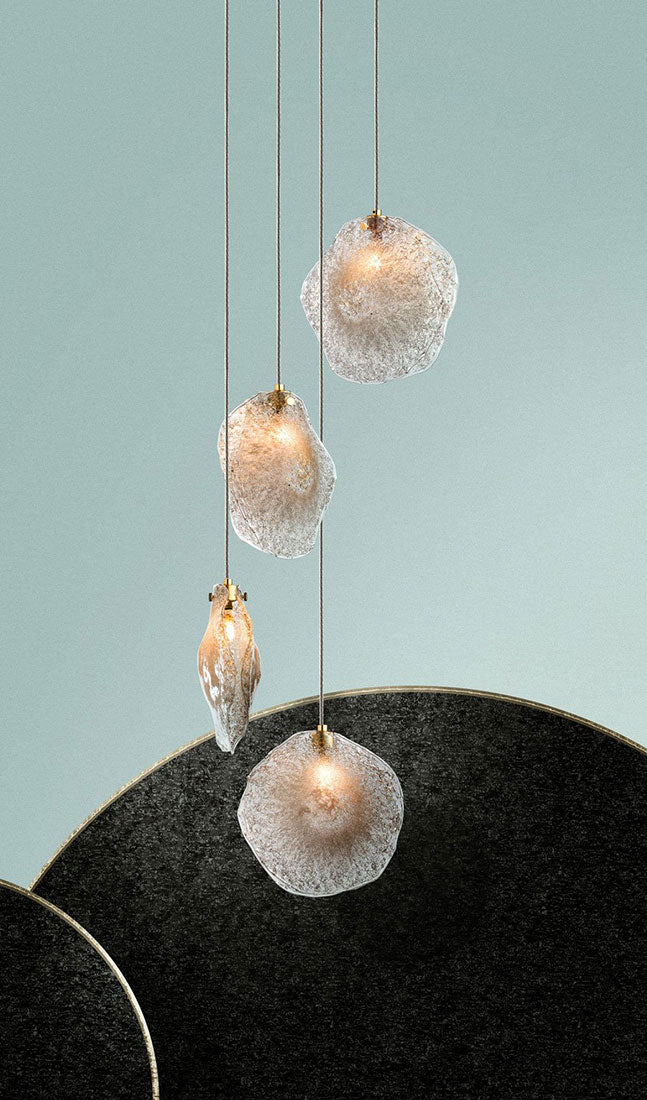
A simple geometric fixture, such as a multi-drop ceiling canopy, can sometimes feel cold. However, when you hang hand-blown glass drops featuring organic seeded, drizzled, or ruffled textures from that clean canopy, the fixture instantly softens. The organic variations in the glass introduce human artistry and warmth, while the overall structure keeps the design modern and tidy.
Soft, Diffused Light Quality
Classic homes rely heavily on lamp shades to diffuse light, while modern spaces often use sharp, recessed spotlights. Handcrafted glass provides a beautiful middle ground. Textures like dimpled or frosted glass scatter light waves in multiple directions. This minimizes glare, softens shadows, and fills the room with a warm, welcoming glow that highlights natural stone countertops, wood cabinets, and rich fabrics.

3. Room-by-Step Lighting Strategies for Transitional Interiors
Every room in a transitional home has unique functional and aesthetic needs. To create a cohesive feel throughout the house, use these targeted placement and selection strategies:
The Transitional Entryway
Your foyer or entryway sets the tone for the entire home. A grand, double-height entryway is the perfect place for a statement piece that bridges design eras.
-
The Strategy: Instead of a traditional, heavy crystal chandelier, choose a cascading, multi-pendant glass installation. A cluster of blown-glass globes suspended at varying heights creates a dynamic, contemporary silhouette, while the soft, amber or warm-white glass options keep the space feeling classic and inviting.
The Transitional Kitchen
Kitchens are highly functional spaces that can easily lean too cold and industrial.
-
The Strategy: Balance sleek, flat-panel cabinets and quartz countertops by hanging warm, textured pendants over the kitchen island. Utilizing blown-glass pendant lights with warm metal hardware, such as brushed brass or satin bronze, introduces necessary warmth and texture without adding visual clutter.
The Transitional Living Room
Living rooms should focus on comfort, layer-based lighting, and architectural symmetry.
-
The Strategy: Use a clean, linear chandelier over the main seating area to define the space. Flank the fireplace mantel or built-in bookshelves with sleek, low-profile wall sconces. Choosing fixtures with simple metal frames and highly textured, hand-blown glass inserts adds a touch of classic craftsmanship to a modern, clean wall profile.
Quick Reference: Balancing Design Elements in Transitional Lighting
To help you select the right fixtures, review how tr
ansitional design elements sit perfectly between classic and contemporary extremes:
|
Lighting Attribute |
Classic / Traditional |
Transitional Balance |
Contemporary / Modern |
|
Glass Texture |
Intricately cut crystal, heavy colored patterns |
Seede d, drizzled, or soft frosted finishes |
Completely clear or highly polished flat surfaces |
|
Metal Finishes |
Antique brass, highly polished gold, heavy wrought iron |
Brushed brass, satin nickel, oil-rubbed bronze |
Polished chrome, polished copper, matte black |
|
Silhouette Shape |
Highly ornate, curved scrollwork, tiered candelabras |
Simplified geometric frames, clean multi-pendant clusters |
Sharp, angular lines, asymmetrical profiles |
|
Light Source |
Exposed incandescent flame bulbs, silk fabric shades |
High-CRI LED modules, blown-glass diffusers |
Integrated light bars, hidden tape lighting |
4. Technical Specifications for Flawless Integration
To ensure your transitional lighting performs as beautifully as it looks, pay close attention to these key technical specifications during the planning phase:
1. Prioritize High Color Rendering Index (CRI)
Transitional homes rely on a carefully curated palette of neutral paint colors, rich wood trims, and textured natural fabrics. To ensure these materials look their best, always specify light sources with a CRI of 90 or higher. This guarantees that colors appear rich, natural, and true to life.
2. Select the Right Color Temperature
Avoid cool, blue-toned light bulbs, which can make transitional spaces feel clinical and sterile.
-
2700K (Warm White): Best for bedrooms, living rooms, and areas where cozy comfort is the primary goal.
-
3000K (Soft White): Ideal for kitchens, bathrooms, and utility areas where clear, crisp task lighting is needed without feeling cold.
3. Incorporate Smart Dimming Controls
To easily transition your space from bright, functional daylight to soft, warm evening light, install high-quality LED dimmer switches. Ensure your fixtures are specified with dimmable drivers that are compatible with your home's automation or wall switch systems to prevent annoying flickering or humming.
Step-by-Step Lighting Layout Design Workflow
For a successful transitional lighting layout, follow this structured design process:
1. Analyze the architectural bones
Identify the classic and contemporary elements already present in the room, such as historic fireplace mantels, high vaulted ceilings, or clean modern windows.
2. Define the functional lighting zones
Map out where task lighting is required (e.g., over islands, reading chairs) and where ambient lighting is needed to fill the volume of the space.
3. Select the focal centerpiece
Choose your primary statement fixture, such as a custom dining chandelier or entryway cluster, ensuring its scale matches the room's dimensions.
4. Layer in supporting fixtures
Add secondary light sources, such as low-profile wall sconces or clean recessed spotlights, to fill in dark corners and eliminate harsh shadows.
5. Verify metal and glass finishes
Coordinate your lighting hardware finishes with the room's existing cabinet pulls, faucets, and furniture legs to create a cohesive, mixed-metal palette.
Aesthetic Note: The beauty of a transitional home lies in its collected, curated feel. Do not feel pressured to purchase matching lighting "sets" from a single retail collection. Mixing complementary glass textures and metal finishes across different fixtures creates a richer, more sophisticated interior that feels naturally developed over time.