


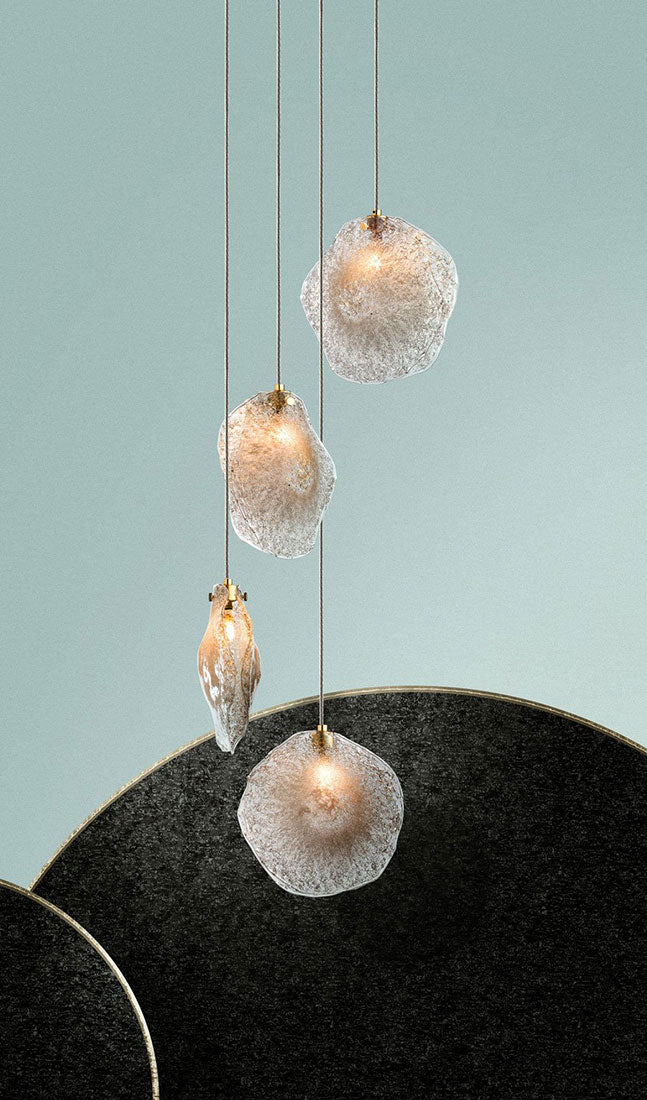


In the world of high-end interior architecture, true luxury is no longer defined by mere opulence, but by authenticity, narrative, and human touch. While mass manufacturing delivers precise uniformity, it leaves spaces feeling sterile and uninspired. In contrast, handcrafted lighting acts as functional sculpture, a tactile bridge between historic art forms and modern spatial design. Beneath the industrial skyline of New York, a quiet revolution in architectural lighting takes shape every day over intense flame and molten silica.
At the heart of this movement is a dedicated glassblowing collective transforming raw elements into breathtaking, custom illumination. Lighting design is fundamentally an emotional medium; it dictates how textures are perceived, how shadows settle, and how an expansive room feels at dusk. By opening the studio doors to reveal the master craftsmen, glassmakers, and metal artisans behind every fixture, we discover how centuries-old glass techniques are reimagined to elevate contemporary luxury living.

The Brooklyn Hotshop: Where Industrial Heritage Meets Modern Craft
Brooklyn has long held a storied reputation for industrial innovation and manufacturing prowess. Today, that legacy lives on through creative ateliers that honor traditional handcraft while pushing the boundaries of contemporary aesthetics. Inside the studio space of Shakúff, the atmosphere is defined by radiant heat, kinetic energy, and intense focus.
The glassblowing process is a choreographed dance performed at temperatures exceeding 2100°F. Master artisans gather molten glass onto blowpipes, shaping the glowing mass through rapid rotational movements, wooden blocks, and hand-held steel shears. This physical intensity requires years of muscle memory and intuitive communication between team members.
The studio workflow harmonizes three core disciplines:
-
The Glassblowing Studio: Master artisans gather, blow, color, and hand-shape molten glass forms.
-
The Metal Fabrication Shop: Craftsmen machine, finish, and assemble custom canopy hardware, stems, and structural frameworks.
-
The Design & Engineering Lab: Architectural strategists map out spatial scales, electrical integration, and bespoke installation physics.
This collaborative environment allows for immediate experimentation, turning abstract architectural concepts into tangible, luminous art objects tailored for prestigious residential and commercial spaces.
Honoring Time-Tested Glass Artistry Techniques
The beauty of handcrafted lighting lies in its technical complexity. Rather than relying on automated molds, the Brooklyn collective utilizes historical techniques refined across centuries, adapted specifically for high-end interior design applications.
Off-Hand Glassblowing
Without the constraint of rigid industrial molds, off-hand glassblowing allows each pendant or globe to develop subtle, organic variations in form and thickness. These minor differences ensure that no two glass elements in a multi-pendant installation are ever identical, imbuing custom chandeliers with movement and personality.
Murano-Inspired Color Layering
By applying pulverized colored glass (frit) and metallic oxides to molten hot glass, artisans create layered depth within the glass wall itself. Historical archives at the Corning Museum of Glass trace how Italian masters pioneered oxide infusions to manipulate light transmission. Today, this heritage technique allows lighting designers to cast warm, sunset-hued ambers, mysterious smokes, or vibrant jewel tones across modern living spaces.
Free-Form Slumping and Casting
In addition to blown forms, kiln-formed and slumped glass techniques allow glassmakers to craft thick, textured art glass slabs. These glass elements capture and refract architectural light, creating striking focal points on wall sconces and large-scale entry installations.

Hand-Blown Glass vs. Mass-Produced Lighting
Understanding the structural, aesthetic, and functional differences between bespoke artisan glass and factory-made lighting is essential when specifying materials for high-end projects:
|
Design Factor |
Hand-Blown Brooklyn Artisan Glass |
Mass-Produced Industrial Glass |
|
Production Method |
Individual hand-crafted gathering, shaping, and blowing |
Automated machine molding and chemical pressing |
|
Material Character |
Organic air bubbles, subtle wall variations, unique refractions |
Perfectly uniform thickness, smooth surface, static light transmission |
|
Customization Flexibility |
Tailored scale, drop length, color tinting, and hardware finish |
Fixed dimensions, limited finishes, stock off-the-shelf options |
|
Light Diffusion |
Dynamic optical diffusion; softens glare naturally |
Direct light passthrough; often requires heavy frost or reveals bulb |
|
Aesthetic Value |
Collectible art glass; holds long-term architectural narrative |
Utility fixture; easily replaced, lacks artistic signature |
|
Spatial Experience |
Captures ambient daylight; acts as sculpture when turned off |
Functionally invisible or sterile when unlit |
Architectural Lighting Ergonomics and Spatial Balance
Designing lighting for luxury spaces requires far more than aesthetic appreciation—it demands a deep understanding of human factors, spatial volume, and light performance. Unshielded light bulbs can produce harsh glare, leading to visual discomfort and physical fatigue.
Research on residential vision ergonomics published by the Illuminating Engineering Society emphasizes the critical role of controlled luminance and optical diffusion in reducing eye strain. Hand-crafted glass, with its subtle internal textures and variable wall thickness, acts as an ideal optical diffuser. It spreads point-source light evenly across its surface, delivering rich lumen output without uncomfortable glare.
Furthermore, academic studies from the Yale School of Architecture highlight how natural materials and organic textures within built environments foster biophilic connection, reducing stress and enhancing well-being. Incorporating hand-blown glass fixtures into grand entryways, dining halls, and living areas introduces an organic element that grounds clean, modern architecture.

Customization: Translating Architectural Visions into Art
Every luxury home or commercial property presents unique spatial challenges, from soaring double-height ceilings to intricate millwork layouts. Off-the-shelf lighting fixtures rarely satisfy these complex spatial demands.
The strength of an artisan collective lies in its ability to offer complete customization:
-
Proportional Scaling: Customizing globe diameters and cluster layouts to match the exact cubic volume of a dining room or foyer.
-
Custom Drop Cascades: Engineering bespoke canopy systems with precise cable drop lengths, allowing multi-pendant cascades to sweep dramatically through multi-story stairwells.
-
Hardware Harmonization: Hand-finishing metal components in brushed brass, satin nickel, oiled bronze, or matte black to match surrounding architectural hardware and fixtures.
To explore how custom glass forms adapt to diverse architectural environments, review Shakúff’s custom gallery to see real-world bespoke installations in modern estates and penthouses.
Practical Design Tips for Specifying Artisan Lighting
When integrating hand-blown glass lighting fixtures into your next interior design project, keep these practical layout tips in mind:
1. Match Canopy Scale to Ceiling Height
For rooms with ceiling heights exceeding 12 feet, ensure the mounting canopy and glass layout scale appropriately. A small canopy will look lost in a massive ceiling plane, whereas a custom-sized canopy grounds the hanging glass elements into the room's overarching architecture.
2. Layer Light Sources Intentionally
Never expect a single decorative fixture to handle all room illumination. Combine your statement hand-blown piece, such as a grand installation from Shakúff’s chandelier collection, with warm recessed accent lighting (2700K) and perimeter wall sconces to create a flexible, layered ambiance.
3. Consider Night and Day Presence
Remember that hand-blown glass works during the day as a sunlight-capturing sculpture. Position pendants near natural light sources or skylights, where daylight can pass through colored oxides and bubbles, casting subtle light patterns into the room even when the electricity is off.
4. Group Pendants in Asymmetric Clusters
When hanging individual glass pendants over kitchen islands or dining tables, experiment with asymmetric grouping and varied drop heights. Staggering heights highlights the unique individual contour of each blown piece, emphasizing the artisanal nature of the collection.
Elevate Your Project with Brooklyn Craftsmanship
Bespoke lighting is an investment in human skill, historic art, and transformative architectural atmosphere. By looking beyond mass production and choosing the deliberate craft of a local glassblowing collective, you bring permanent soul, character, and beauty into your space.
Whether you are an interior designer sourcing a showstopping center feature, an architect planning a complex commercial lobby, or a homeowner curating your dream estate, artisanal glass art offers endless possibilities. Contact our design team today to discuss your vision, explore custom glass finishes, and commission a unique lighting masterpiece.