


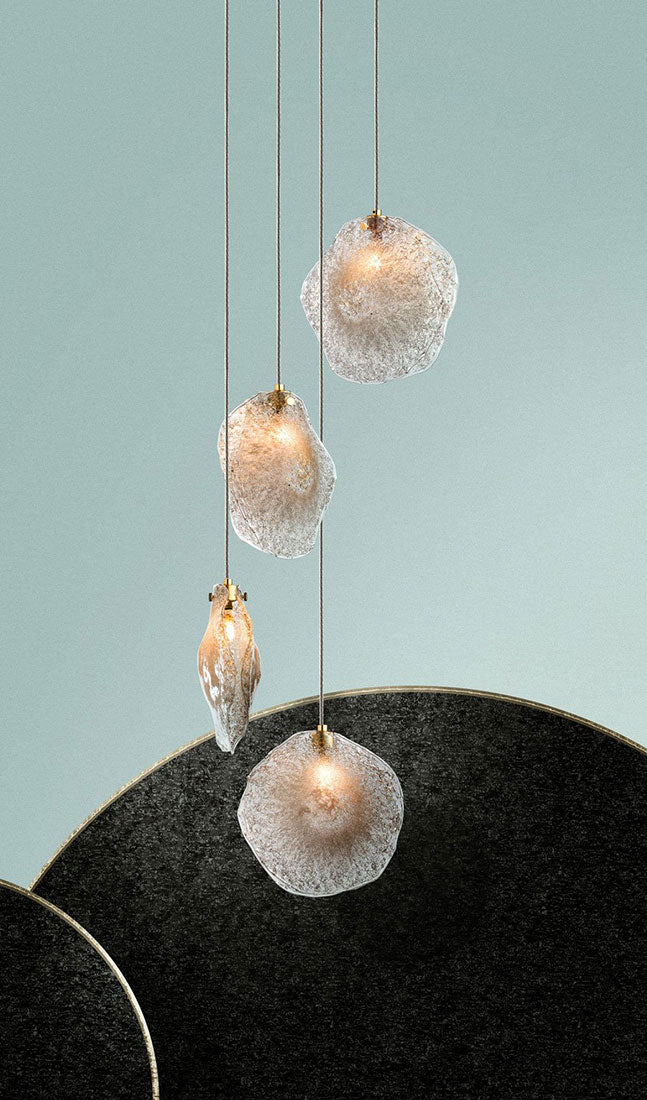


Handcrafted glass art can change the way an interior feels by introducing light, texture, transparency, movement, and material character into the architecture. Unlike a purely decorative object, a glass lighting fixture interacts continuously with its surroundings. Daylight passes through it, artificial light reveals its surface, and its silhouette changes depending on where it is viewed.
For Shakúff, that relationship between glass and light is central to the design process. The Brooklyn studio describes its fixtures as collaborative works that bring together planning, craftsmanship, and the client's vision, with glassblowing used to create what the studio calls sculptures of light.
Handcrafted Glass Adds Material Depth
Interior design often depends on the relationship between materials.
Stone provides mass. Wood introduces warmth and grain. Metal creates structure and definition. Glass contributes something different because it can appear both physically present and visually light.
Hand-blown glass can be smooth, dimpled, perforated, layered, frosted, or heavily textured. Each treatment responds differently to illumination and surrounding materials.
The Nimbus collection is a strong example. Its smooth blown-glass orbs are carefully dimpled by hand, creating a subtle sense of movement across the surface. Shakúff offers the collection in clear and frosted glass, allowing the same basic form to produce different levels of transparency and softness.
In a restrained interior, this type of texture can provide visual depth without adding unnecessary ornament.
Handmade Variation Creates a More Organic Interior
One of the defining characteristics of handcrafted glass is that individual pieces are not mechanically identical.
Shakúff notes that variations in size, color, shape, and texture are inherent to its handmade glass, including characteristics such as bubbles, fissures, crackling, and crazing.
In interior design, these small differences can make repeated elements feel less rigid.
A chandelier composed of many similar glass pendants can still maintain a clear visual rhythm while allowing each piece to retain subtle individuality. This is especially useful in contemporary spaces where repetition is important but perfect uniformity could make the room feel overly manufactured.
The result is a balance between control and variation, which is difficult to achieve with purely industrial materials.
Glass Changes the Way Light Moves Through a Room
The impact of handcrafted glass goes beyond appearance.
Texture and form alter the way illumination is perceived. Clear glass can preserve openness, frosted surfaces soften visibility through the fixture, and textured glass can break light into more complex reflections and shadows.
Shakúff's Mod collection uses hand-blown glass orbs with delicately perforated, mesh-like surfaces. According to the studio, those openings create speckled shadows on surrounding walls.
This makes the fixture active within the interior.
Instead of light moving directly from the source into the room, the glass modifies the experience through surface, shadow, and reflection. Walls and ceilings become part of the composition rather than simply backgrounds for the fixture.
Sculptural Glass Can Become an Architectural Focal Point
Handcrafted glass lighting is especially effective when a room needs a focal point without introducing a visually solid object.
Because glass can remain transparent or translucent, a large fixture can occupy significant architectural volume while preserving sightlines.
This is useful in open living spaces, double-height foyers, stairwells, and rooms with large windows or prominent artwork.
The Kadur Drizzle collection demonstrates how individual glass elements can develop into larger compositions. Each pendant uses concentric glass orbs, with drizzled glass fibers contained within the center form. The collection can move from a small group of pendants to a more substantial chandelier arrangement.
The visual impact comes from both the glass itself and the way multiple pieces are suspended through space.
Glass Can Soften Strong Architectural Lines
Modern interiors frequently rely on strong geometry.
Rectilinear cabinetry, stone slabs, structural beams, large windows, and linear furniture can create a highly ordered environment. Handcrafted glass offers an effective counterpoint because many blown-glass forms introduce curves and slight irregularities.
A spherical or elongated glass pendant can soften a room without undermining its architectural clarity.
The Tamar collection, for example, uses elongated hollow glass tubes wrapped with drizzled glass. Shakúff describes the design as layered blown glass in which refraction through the forms contributes to the glow of the fixture.
Placed against clean architectural surfaces, this kind of texture can introduce movement and a more tactile quality.
Repetition Turns Glass Objects Into Installations
A single handcrafted pendant is experienced as an object. Multiple pieces can begin to operate more like an installation.
Spacing, height, density, orientation, and repetition all influence how a group of glass elements relates to the room.
This is where handcrafted lighting becomes particularly valuable to interior designers. A composition can be developed to follow a staircase, extend along a dining table, fill a double-height void, or create a concentrated focal point above a seating area.
Shakúff's current collection includes chandeliers, pendants, sconces, floor lamps, and table lamps, with many collections available across several fixture types.
This allows the same material language to appear at different scales throughout an interior rather than requiring every fixture to be identical.
Handcrafted Glass Supports More Personal Material Palettes
Glass can also help connect lighting to the broader palette of an interior.
Shakúff combines glass with metal, wood, and other natural materials as part of its product development approach.
That flexibility matters because lighting is rarely viewed independently from furniture, flooring, stone, fabrics, and architectural finishes.
Clear glass can maintain visual openness around richly patterned stone. Frosted glass can soften a minimalist room. Amber or gray tones can strengthen an existing color palette. Brass hardware can introduce warmth, while darker finishes can produce greater contrast.
The intention does not need to be perfect matching. Often the strongest result comes from selecting glass and hardware that create a deliberate relationship with the room's other materials.
Custom Glass Lighting Can Be Designed Around the Space
The impact of handcrafted glass becomes even stronger when the fixture is developed specifically for the architecture.
Shakúff's custom lighting process begins with discovery, including the client's design goals, colors, finishes, structural conditions, beams, lift systems, and electrical requirements. The concept then moves into design and appraisal, where a structurally considered proposal and 3D rendering are prepared before fabrication.
This makes it possible to consider glass not simply as a product material, but as part of the spatial design.
A fixture can be adjusted to suit ceiling height, room proportions, viewing angles, furniture placement, and the visual role the lighting should play.
For interior designers, that flexibility is often what allows handcrafted glass to feel truly integrated rather than applied after the room is finished.
Explore Shakúff's handcrafted glass lighting collection or develop a custom composition designed around the proportions, materials, and atmosphere of your interior.
Frequently Asked Questions
Why is handcrafted glass valuable in interior design?
Handcrafted glass combines material character with the ability to transmit and reflect light. Variations in texture, shape, and surface can create greater visual depth than highly uniform manufactured glass, while transparency allows substantial fixtures to maintain open sightlines and a relatively light architectural presence.
Does handmade glass work in minimalist interiors?
Yes. Handmade glass can work especially well in minimalist interiors because its texture and subtle variation provide interest without requiring excessive decoration. A simple blown-glass form can remain visually restrained while still contributing depth, reflection, and craftsmanship to an otherwise controlled material palette.
How does textured glass affect a room?
Textured glass changes how illumination moves through and around a fixture. Perforations, dimples, layered glass, or drizzled surfaces can produce different reflections, shadows, and levels of transparency. This allows the lighting to influence nearby walls, ceilings, and materials rather than functioning only as an isolated object.
Can handcrafted glass lighting be customized for an interior?
Yes. Shakúff states that its collections are customizable, with options varying by product and collection. These can include colors, finishes, sizes, pendant arrangements, and other details. More extensive projects can also be developed through the studio's dedicated custom lighting process.
Is handcrafted glass only suitable for statement chandeliers?
No. Handcrafted glass can be used at many scales. Shakúff's collections include pendants, sconces, chandeliers, floor lamps, and table lamps, allowing glass to appear as a large architectural focal point or as a quieter material detail closer to the human scale.