


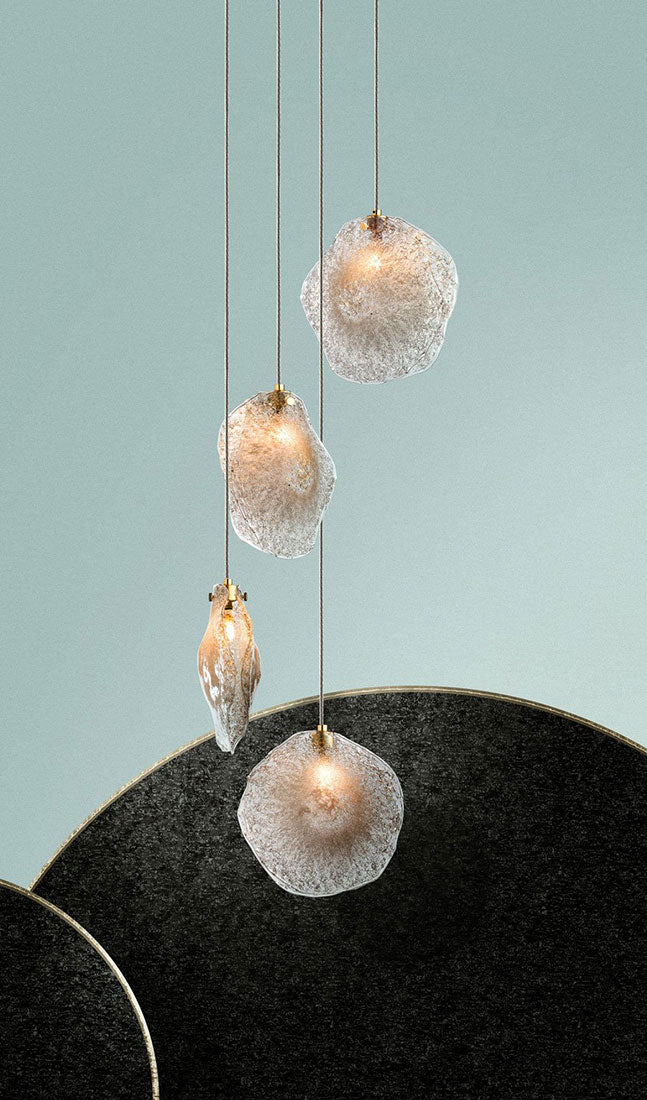


When lighting a luxury home, a commercial space, or a bespoke hospitality venue, the choices you make shape the entire atmosphere. Lighting is no longer just a functional necessity; it is a vital architectural element that influences mood, highlights textures, and defines spaces.
As you browse your options, you will quickly find two very different paths: hand-blown glass lighting and mass-produced fixtures.
At first glance, a factory-made pendant and an artisan-crafted glass globe might seem to serve the same purpose. However, their production methods, optical properties, and physical longevity are entirely different.
To help you make an informed decision for your next project, this guide breaks down the physical, structural, and artistic differences between handmade glass artistry and mass-market lighting.

1. The Physics of Production: Molded vs. Hand-Sculptured
The main difference between these two categories lies in how they are made. This process directly affects the final look, strength, and feel of the glass.
Mass-Produced Glass: Machine Pressing and Blow-Molding
Mass-market fixtures are manufactured in automated factories using assembly lines. Molten glass is fed into metal molds and shaped using high-pressure compressed air or mechanical plungers. This process is highly efficient, but it leaves distinct telltale signs:
-
Visible Seam Lines: When the two halves of a metal mold separate, they leave a thin, raised ridge or seam line along the glass.
-
Uniform Stress Points: Rapid mechanical cooling can create microscopic weak spots where the glass meets the cold metal mold, making it more prone to cracking under thermal stress.
-
Artificial Uniformity: Because every piece is made from the exact same mold, they lack character. There are no natural variations to catch the light or add visual interest.
Hand-Blown Glass: The Hot Shop and the Blowpipe
Artisan glassblowing relies on techniques that have remained virtually unchanged for thousands of years. A master artisan gathers molten glass from a furnace heated to over 2,000 degrees Fahrenheit on the end of a hollow steel blowpipe. Using lung power, hand tools, and gravity, the artist inflates and shapes the glass in mid-air.
According to historical research from the Corning Museum of Glass, this fluid process preserves the natural tension of the liquid glass. Because the hot glass cools gradually without touching cold iron molds, it develops a stronger, more resilient structure and a beautiful fire-polished finish.
2. Light Refraction: The Magic of "Living" Glass
A light fixture's main job is to shape and distribute light. The structural differences between hand-blown and machine-made glass drastically change how light behaves as it passes through the fixture.
Flat, Dull Machine Refraction
Machine-made glass is pressed to a uniform thickness, resulting in a flat, predictable surface. While this makes the glass consistent, it also makes the light passing through it feel sterile and harsh. There are no organic textures or variations to bend the light waves, which can lead to flat shadows and glare.
Dynamic, Sparkling Refraction
Because hand-blown glass is shaped by hand, its thickness varies naturally. These subtle differences in thickness act like organic lenses, bending and scattering the light in multiple directions.
Furthermore, hand-blown techniques allow artisans to incorporate distinct, intentional textures that bring the light to life:
-
Seeded Glass: Incorporating tiny air bubbles into the molten glass creates a sparkling, starry night effect when lit.
-
Drizzled Textures: Wrapping delicate glass threads around the hot body creates a fluid, organic pattern that casts beautiful, moving shadows across the walls.
-
Ruffled Edges: Shaping the glass by hand creates soft, undulating edges that diffuse light beautifully, making it perfect for custom dining chandeliers.
These natural variations turn simple light into a warm, dynamic glow that shifts as you move through the room.
Quick Comparison: Hand-Blown vs. Mass-Produced Lighting
To help you evaluate your options, this table compares the key features of both manufacturing methods:
|
Feature / Attribute |
Hand-Blown Glass Lighting |
Mass-Produced Fixtures |
|
Manufacturing Method |
Hand-sculpted by skilled artisans in a hot shop |
Automated machine pressing and blow-molding |
|
Material Quality |
Premium silica mixes with high optical clarity |
Low-cost soda-lime glass with high iron content |
|
Visual Character |
Unique variations, organic textures, no mold seams |
Completely identical pieces, visible seam lines |
|
Light Refraction |
Soft, dynamic diffusion with sparkling organic patterns |
Flat, uniform light distribution that can cause glare |
|
Customization |
Fully custom configurations, sizes, and colors |
Standard off-the-shelf sizes and limited options |
|
Longevity |
Thick, resilient glass that resists thermal cracking |
Thinner, brittle glass prone to chipping |

3. Structural Integrity and Material Composition
Beyond its visual appeal, high-end, hand-blown glass is structurally superior to mass-market glass. This boils down to the raw materials and the annealing process.
The Problem of Iron Contamination
Low-cost factories often use lower-grade silica mixes that contain iron impurities. This contamination gives mass-produced "clear" glass a dull, greenish or grayish tint.
In contrast, premium art studios use pure, low-iron silica mixes. This ensures the glass is optically clear and colorless, allowing the true color of your light bulbs to shine through.
The Annealing Process
When glass is shaped, it must be cooled slowly to relieve internal stresses. This cooling process is called annealing.
-
In Factories: To keep up with high-speed production, machine-made glass is often rushed through the cooling phase. This quick cooling can trap internal structural stress within the glass, making it brittle and easily shattered by minor impacts or temperature changes from warm light bulbs.
-
In Artisan Studios: Hand-blown pieces are placed into a specialized kiln called an annealer or lehr. The temperature is lowered slowly over 12 to 24 hours. This gradual cooling relieves all internal stress, leaving the glass strong, durable, and highly resistant to thermal cracking.
Step-by-Step Guide to Spotting Authentic Hand-Blown Glass
If you are evaluating a light fixture, use this simple sequence to determine if it is truly hand-blown or a machine-made copy:
1. Check for mold seam lines
Run your fingers along the sides of the glass globe or pendant. If you feel a raised, vertical line, the glass was pressed in a machine mold. Authentic hand-blown glass is completely seamless.
2. Inspect the pontil mark
Look at the bottom or top of the glass shade. You should see a small, polished scar or dimple called a pontil mark. This is the spot where the glassblower broke the hot glass off the steel blowpipe. Machine-made glass will have a perfectly flat, stamped base.
3. Look at the color clarity
Hold the glass up to a natural light source. Authentic, high-quality glass will look perfectly clear or show vibrant, layered colors. Low-grade, mass-produced glass often has a dull, greenish-yellow tint along the edges.
4. Search for organic variations
Compare two fixtures of the same design. If they are identical down to the millimeter, they are factory-made. If you notice slight variations in thickness, shape, or texture, you are looking at authentic, handmade art.
4. Why Handcrafted Lighting is a True Investment
While mass-produced fixtures are cheaper upfront, they lack the emotional resonance and enduring value of custom, handcrafted lighting.
When you choose hand-blown glass lighting, you are not just buying a functional item. You are investing in a functional work of art that is tailor-made for your space.
Many high-end studios offer interactive design tools that let you customize every detail. You can select the precise size, canopy shape, drop length, and glass colors to complement your home's unique interior architecture.
Ultimately, hand-blown glass fixtures elevate a room from ordinary to extraordinary. They act as beautiful conversation pieces, casting a warm, artistic glow that makes your home feel truly one-of-a-kind.
Design Tip: To highlight the intricate textures of a hand-blown glass pendant, pair it with a dimmable, high-CRI (Color Rendering Index) LED bulb. This will bring out the sparkling details in seeded or drizzled glass without casting harsh, flat shadows across your walls.