


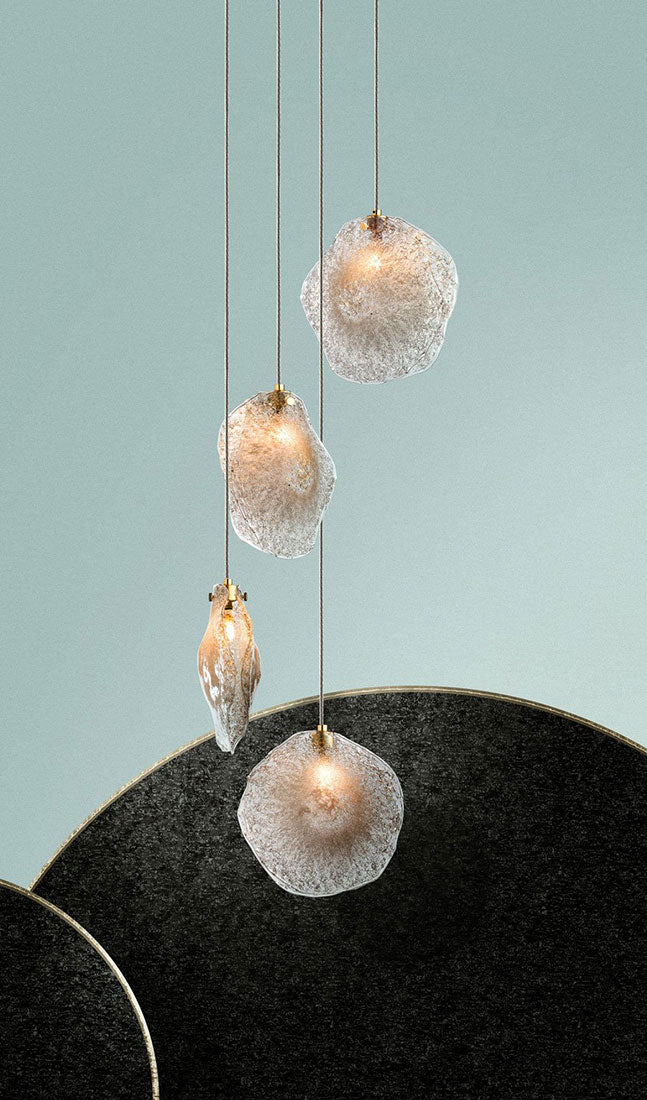


In high-end interior architecture, perfection is often mistaken for uniformity. Machine-molded glass offers sterile consistency, yet it lacks the soul, texture, and emotional resonance that define true luxury. In bespoke residential spaces, lighting is far more than a utility, it is functional sculpture capable of dictating the emotional rhythm of a room. When raw elements are manipulated by master artisans over open flame, the resulting "imperfections" are not flaws; they are the indelible signatures of human craftsmanship.
Tiny air pockets, delicate surface crackling, and organic fissures act as internal prisms, capturing light and scattering it into rich, dynamic patterns across a space. These artisanal characteristics transform static illumination into an evolving artistic experience. Understanding how these features interact with light allows interior designers and discerning homeowners to appreciate hand-blown glass as a living medium, one where every bubble and fissure tells a unique story of origin, energy, and molten art.

The Philosophy of Perfect Imperfection in Bespoke Design
The appreciation of organic texture in luxury lighting closely parallels the Japanese philosophy of wabi-sabi, finding beauty in impermanence and natural variation. Modern luxury has shifted away from mass-produced uniformity toward authentic, tactile craftsmanship.
When glassblowers gather molten silica at temperatures exceeding 2000°F, the material is alive and highly reactive. Atmospheric air becomes trapped inside, and sudden temperature shifts alter the surface tension. Rather than hiding these behaviors, studios like Shakúff celebrate them as mark-making tools.
The transformation from raw silica to refined art follows an organic progression:
-
Thermal Fusion: Raw silica and oxides are heated to extreme molten temperatures.
-
Artisanal Manipulation: Master glassmakers introduce controlled air flow and movement.
-
Textural Capture: Rapid cooling locks trapped air bubbles, surface crackles, or internal strata in place.
-
Refractive Illumination: Internal light sources scatter across these features, filling surrounding spaces with organic patterns.
These internal structures alter how rays pass through the medium, replacing flat glare with multidimensional depth. A clean, machine-pressed globe simply allows light to pass through uniform thickness; an artisanal glass piece refracts, bends, and softens light, casting organic shadows that enliven surrounding walls and architectural details.
Anatomy of Handcrafted Glass Textures
To fully appreciate the artistry behind custom lighting, one must understand the specific techniques that introduce texture, depth, and character to molten glass.
Bubbles (Pulegoso)
Known historically as pulegoso, this technique involves deliberately trapping thousands of minute air bubbles within the glass matrix. Originating in Murano, Italy, during the early 20th century, the process uses specific minerals or organic additives introduced to the melt. When illuminated, each microscopic bubble acts as an independent lens, diffusing light gently outward and creating an ethereal, underwater glow.
Crackle Glass (Ghiacciato)
Achieved by dipping a hot, partially blown glass bulb briefly into cold water before reheating and continuing the shape, crackle glass develops an intricate web of fine surface fractures. The sudden thermal shock creates a cracked outer shell while maintaining structural integrity. Historical glass analysis from the Corning Museum of Glass notes that this thermal shock technique preserves internal stability while drastically altering visual light transmission, generating brilliant, jewel-like light refractions.
Fissures and Strata (Veining)
Fissures occur when layers of glass at varying temperatures or with different mineral compositions are gathered and stretched together. These subtle ridges, folds, and internal veining reflect the fluid dynamics of the glassmaking process itself. They catch ambient daylight even when unlit, turning a pendant or chandelier into an intriguing sculptural element during the day.

Comparing Glass Typologies in Luxury Interiors
Selecting the right glass character depends on the atmospheric goals of your space. The table below outlines how different artisanal glass traits compare to industrial glass:
|
Glass Typology |
Artistic Technique |
Visual Light Effect |
Ideal Spatial Application |
|
Pulegoso (Bubbled) |
Mineral infusion into molten melt |
Softened, multi-directional ambient diffusion |
Grand entry foyers, dining chandeliers, relaxation zones |
|
Ghiacciato (Crackled) |
Controlled thermal shock dipping |
High-contrast sparkled refractions and shadow webs |
Accent pendants, vanity sconces, bar lighting |
|
Fissured / Veined |
Layered temperature manipulation |
Fluid, ribbon-like light pathways and surface depth |
Custom sculptural installations, stairwell drops |
|
Machine-Molded |
Industrial automated pressing |
Flat, uniform light passthrough without variance |
Commercial utility spaces, task-only applications |
The Physics of Light Diffusion and Ergonomics
From an architectural lighting perspective, textured glass offers profound functional benefits alongside its aesthetic appeal. Smooth, clear glass often exposes the harsh point source of an LED light engine, creating uncomfortable glare.
According to ergonomic design principles outlined by the Illuminating Engineering Society, mitigating direct glare is essential for visual comfort and preventing eye fatigue in residential environments. Bubbles and crackling serve as natural diffusers. By scattering light vectors in hundreds of directions simultaneously, textured glass softens the illumination, maintaining high lumen output while significantly increasing visual comfort.
Furthermore, research published through MIT's Department of Architecture regarding daylighting and material interaction emphasizes how textured transparent materials alter spatial perception, making interior volumes feel larger and more dynamic through complex shadow casting.
Customization: Tailoring Textures to Your Architectural Vision
Every architectural space possesses distinct scales, natural light conditions, and material palettes. Off-the-shelf lighting fixtures struggle to meet the bespoke demands of luxury residential projects, where ceiling heights and color schemes require precise customization.
At Shakúff, custom design involves tuning the density of glass inclusions to match the specific needs of a project:
-
Density Control: Adjusting the bubble ratio from light and subtle to dense and opaque depending on whether the fixture serves as ambient background or primary task lighting.
-
Color Infusion: Blending rich metallic oxides, such as amber, smoke, or cobalt, into fissured glass to complement surrounding wood grains, stones, and metals.
-
Scale Adjustment: Scaling the dramatic intensity of crackling or veining to ensure it reads proportionally, whether viewed up close on a bedside sconce or from afar in a multi-story stairwell.
To see how tailored glass textures interact within expansive interiors, browse Shakúff’s custom gallery for inspiration on bespoke layouts and finish combinations.
Practical Design Advice for Integrating Textured Glass
When specifying handcrafted glass lighting for high-end residential or hospitality interiors, consider these essential layout guidelines:
1. Balance Textures with Surrounding Surfaces
Textured glass shines brightest when paired with complementary interior finishes. Combine heavily bubbled or crackled glass fixtures with smooth, matte surfaces, such as honed marble, Venetian plaster, or flat wood paneling, to create a balanced tactile narrative.
2. Leverage Layered Illumination
Do not rely solely on a single textured fixture to illuminate an entire room. Pair statement glass pendants or a central dining fixture from Shakúff’s chandelier collection with warm recessed architectural lighting (2700K–3000K) to maintain functional light levels while letting the glass art serve as the ambient accent.
3. Consider Unlit Daylight Presence
Remember that custom glass art works twice: once when powered on at night, and once as an art object during the day. Position fixtures where natural sunlight from adjacent windows can strike the glass, illuminating internal air bubbles and fissures even when the artificial light engine is switched off.
4. Calibrate Suspended Drop Heights
Ensure multi-pendant cascades featuring textured glass are hung at varying drop lengths. Staggering the heights highlights the unique, individual character of each hand-blown piece, preventing any single texture pattern from repeating predictably.
Elevate Your Project with Handcrafted Glass Art
In the realm of luxury design, true sophistication lives in the details that celebrate human artistry over mechanical precision. Bubbles, crackling, and fissures are the authentic fingerprints of molten glassmaking, capturing energy, heat, and light to transform architectural spaces into warm, memorable sanctuaries.
Whether you are designing a sleek modern penthouse, a sprawling coastal estate, or a boutique hospitality venue, incorporating bespoke glass lighting guarantees a distinct identity that cannot be replicated. Contact our design team today to discuss custom glass commissions, texture options, and architectural lighting solutions for your next project.