




Modern architecture is defined by its clean lines, intentional structural honesty, and a deliberate restraint in ornamentation. In these spaces, form follows function, and every material asset, from polished concrete floors to expansive steel-framed windows, is chosen to contribute to a cohesive spatial narrative.
When designing or refining a modern home, lighting is often celebrated for its atmospheric quality. Designers spend hours debating color temperatures and lumen outputs, yet the structural backbone of these light sources is frequently overlooked. The lighting hardware, the canopies, rods, cables, fasteners, and metal finishes that suspend and secure a luminaire, plays a critical role in architectural harmony.
If selected carelessly, bulky or overly ornate hardware can shatter the minimalist illusion of a room, creating visual clutter. Conversely, thoughtfully specified hardware bridges the gap between engineering and art, acting as a quiet extension of the building’s core structural identity.
The Spatial Philosophy of Modern Architectural Lines
To select the ideal hardware configuration, one must analyze the specific sub-movements shaping modern residential design. While all modern design values simplicity, different architectural styles interact with materials in unique ways.

Modern spatial design relies on highly disciplined detailing where hardware must either integrate seamlessly or cleanly disappear.
Minimalist Precision and the Invisible Detail
In strict minimalist spaces, the goal of the architecture is to make structural strain disappear. Walls feature flush-mount baseboards, doors sit on concealed hinges, and ceilings are smooth, unbroken planes. Hardware in these environments should adopt a philosophy of erasure. Canopies, the metal plates that cover electrical junction boxes, should be as low-profile as possible.
Flush-mount or mud-in canopies, which sit completely level with the drywall surface, ensure that the eye focuses entirely on the light sculpture itself rather than the mechanical connection to the ceiling.
Hardware Integration Architecture
| Architectural Style | Hardware Philosophy | Key Material Elements |
|---|---|---|
| Strict Minimalism | Erasure and absolute concealment | Flush-mount mud canopies, ultra-thin stainless steel cables |
| Industrial Modernism | Exposed, raw structural honesty | Satin black iron, rigid downrod stems, exposed knurled bolts |
| Organic Modernism | Tactile material synergy | Brushed brass, matte bronze, live timber accents |
Industrial Honesty and Exposed Structural Elements
Industrial modernism embraces the opposite approach, celebrating the mechanical components that keep a building functional. In homes featuring exposed steel beams, raw brickwork, or lofted ceilings, lighting hardware should feel substantial and grounded.
Instead of hiding the connections, look for hardware that emphasizes structural honesty. Rigid downrods, articulated swivels, and visible, knurled fasteners in darkened steel or matte black iron complement the raw, muscular energy of industrial layouts.
Navigating the Choice Between Cable and Stem Suspensions
One of the most consequential decisions when specifying architectural lighting hardware is determining how the fixture will descend into the space. The choice between flexible aircraft cables and rigid metal stems changes both the physics and the visual weight of an installation.
Aircraft Cables: Achieving the Illusion of Weightlessness
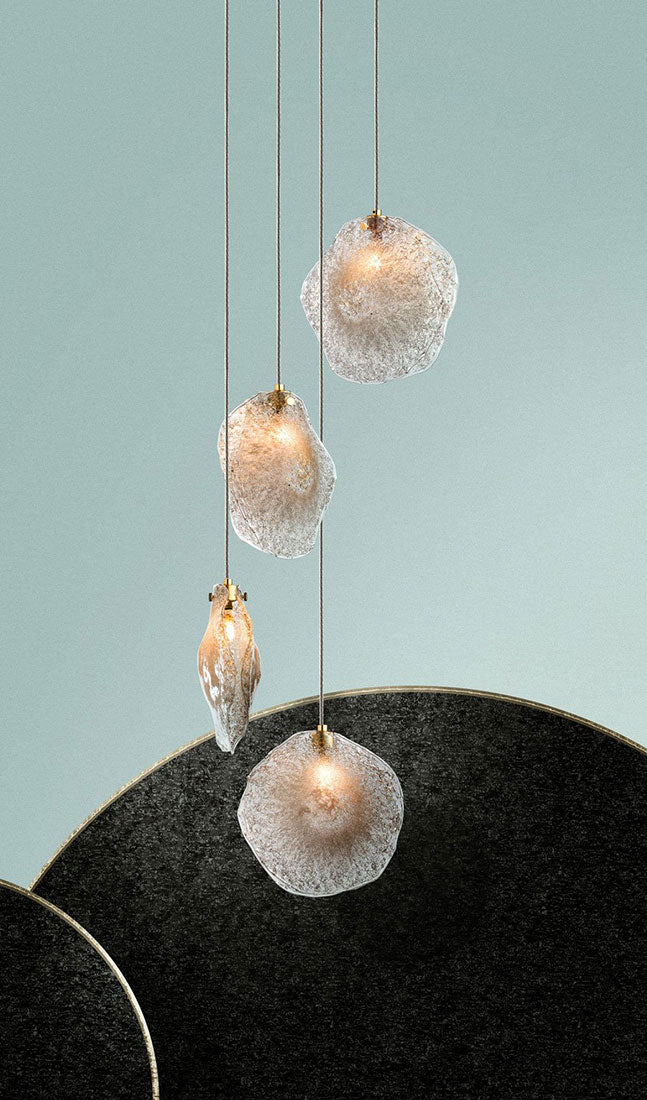
Fine aircraft cables, typically manufactured from high-tensile stainless steel, are the gold standard for creating a sense of weightlessness. Because these cables possess an incredibly thin profile, they virtually disappear when viewed from a distance, making hand-blown glass drops or linear geometric modules appear to float freely in mid-air.
This approach aligns perfectly with the biophilic design principles outlined in environmental architecture studies published by the U.S. General Services Administration. By minimizing the visible structural support, the luminaire mimics the effortless distribution of natural phenomena, such as a cluster of rain droplets or a cloud formation drifting through a room. Cables also provide unparalleled flexibility, allowing designers to adjust the hanging depths of individual pendants on-site to create complex, undulating waves or dense, organic clusters.
Rigid Stems: Defining Directional Intent
Metal stems or downrods introduce a sense of permanence, architecture, and graphic geometry. A rigid stem forces a fixture to remain perfectly static, anchoring it firmly within the room's layout. Stems are highly effective in spaces with consistent air currents, such as entryways near exterior doors or areas situated directly beneath high-volume HVAC vents, where floating cables might sway excessively.
When using stems, the finish of the metal rod must match or intentionally contrast with other linear elements in the room, such as window mullions, stair railings, or cabinetry hardware, to maintain a unified graphic line.
Metal Finishes: Harmonizing with the Interior Material Palette
The finish applied to lighting hardware should never be selected in isolation. It must participate in an active dialogue with the broader material palette of the interior. Modern design trends have moved away from highly polished, reflective chrome surfaces in favor of living or low-lustre finishes that possess depth and tactile warmth.

Low-lustre brass and bronze hardware treatments anchor glass fixtures while diffusing unwanted glares.
Material Palette Synergy Reference
| Hardware Finish | Light Reflection Profile | Best Architectural Pairings |
|---|---|---|
| Matte Black | Zero reflection, high graphic vector lines | Black steel window framing, raw concrete grids, charcoal architectural accents |
| Brushed Brass | Warm, directional low-lustre diffusion | Rift-sawn white oak timber, warm lime plaster walls, travertine stone |
| Satin Nickel | Cool, soft and muted metallic reflection | Stainless steel professional appliances, contemporary minimalist white palettes |
| Oil-Rubbed Bronze | Deep, variable absorption with living patina | Reclaimed timbers, exposed brickwork, deep and moody spatial color stories |
The Graphic Power of Matte Black
Matte black hardware functions as visual punctuation within a modern interior. It provides a sharp, graphic contrast against white plaster ceilings, tracing clean vectors through the air. If an architectural project features black steel window frames or dark hardware elements on the doors and cabinetry, specifying matte black lighting components unifies the space instantly, tying the entire layout together.
The Warm Luxury of Brushed Brass and Satin Bronze
As contemporary architecture shifts toward warmer, organic variations of modernism, metals like brushed brass and satin bronze have become essential design tools. These finishes undergo subtle manufacturing treatments, such as directional brushing or light chemical patination, to dull mirror-like reflections into a soft, golden glow.
According to metallurgy and color interaction documentation from the Lighting Research Center, non-reflective, warm metal finishes absorb harsh glares while reflecting a creamy, localized ambiance. This quality makes them ideal companions for natural materials like rift-sawn white oak, walnut, travertine, and micro-cement.
Scale, Proportion, and Canopy Integration
A common pitfall in luxury lighting configuration is matching a grand, multi-tiered light sculpture with an undersized or generic canopy. The mounting plate must be scaled proportionally to the overall footprint of the fixture to ensure visual and structural stability.
Managing Large-Scale Volumetric Clusters
When organizing a massive installation containing dozens of hand-blown glass pendants, such as a grand stairwell or a great room centerpiece, the canopy transitions into a major architectural element. Rather than utilizing multiple individual junction boxes, premium configurations employ a singular, cohesive canopy structure that spans the length of the installation zone.
These large-scale plates can be customized to match the geometry of the furniture below. For elongated dining surfaces, a linear rectangular canopy arrays the suspension cords beautifully along a single axis. For circular tables or helical stairwells, a round or spiral canopy tracks the natural movement of the architecture.
By working with custom creation models championed by sustainable design organizations like the U.S. Green Building Council, these custom-milled mounting plates minimize material waste and simplify installation by reducing the number of ceiling penetrations required.
Cohesive Technical Engineering: The Artisan Connection
The seamless integration of hardware and architecture is best realized when the lighting system is treated as a single, bespoke commission rather than a collection of mismatched parts. Mass-produced retail fixtures are built with rigid, non-adjustable components that force homeowners to adapt their rooms to the limitations of the product.

Bespoke engineering allows structural canopies to be finished to perfectly match the room blueprint.
Bespoke design studios reverse this dynamic, ensuring the hardware bends completely to the spatial requirements of the building. Exploring the diverse collections at Shakúff Luxury Lighting reveals how masterfully engineered hardware transforms artistic glass into architectural statements.
Whether examining the minimal, single-cord suspensions of individual pendant lights or the complex, heavy-duty tracking systems engineered for massive custom chandeliers, the hardware is built to disappear or accentuate the space intentionally.
For instance, the studio’s specialized canopy options can be custom-painted or finished to perfectly match the exact paint code of your plaster ceiling, allowing the metal plate to blend away entirely, leaving only the hand-blown glass elements to command the visual field. This uncompromising attention to technical detailing ensures that the final installation functions as a seamless, organic extension of the home’s blueprint.
Achieving Architectural Balance
Ultimately, choosing the right lighting hardware is an exercise in restraint, balance, and intentionality. By analyzing the structural lines of your home, selecting metal finishes that converse with your existing material palette, and choosing the appropriate suspension method, you elevate your lighting from a basic decorative accessory into a core architectural asset.
When hardware is chosen with the same rigor applied to the building’s layout, the entire environment falls into a harmonious rhythm, allowing light, space, and material to exist in flawless equilibrium.
If you are ready to move away from generic, off-the-shelf fixtures and design a custom lighting masterpiece whose hardware, finishes, and scale are precisely tailored to the architectural lines of your home, the design consultants at Shakúff are prepared to collaborate with you. Connect with our specialized studio team today to explore our customizable structural options, evaluate metal finish samples, and begin co-creating an artisan lighting installation built to integrate beautifully with the spirit and framework of your unique space.