


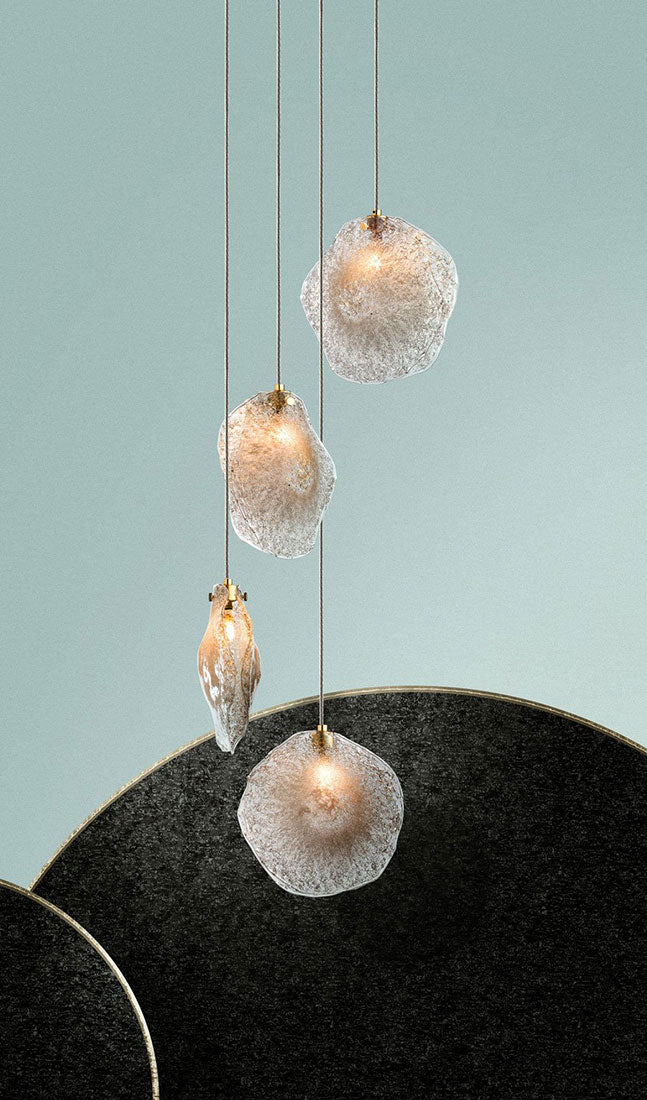


Brass and glass fixtures bring together two materials with very different visual qualities. Glass introduces transparency, texture, and the movement of light, while brass provides warmth, definition, and a more substantial material presence. Used thoughtfully, the combination can make an interior feel refined without becoming overly decorative.
For Shakúff, this relationship appears throughout its handcrafted lighting collections. Hand-blown glass is paired with brass hardware and, across many collections, brushed brass is available as a finish option. The result is lighting that can complement contemporary, transitional, and more restrained interiors while allowing the material itself to remain a focal point.
Why Brass and Glass Work So Well Together
The appeal of brass and glass comes largely from contrast.
Glass can appear visually light because surrounding architecture remains visible through it. Brass has greater visual density and creates clearly defined edges, connections, and structural details. Together, they allow a fixture to have presence without appearing excessively heavy.
The combination also creates a useful balance between precision and variation. Metal hardware provides clean lines and consistency, while handmade glass introduces small differences in shape, surface, and texture.
Shakúff's handcrafted glass naturally includes variation, and its chandelier collections can be customized with finishes including brushed brass depending on the design.
This makes brass and glass particularly effective in interiors where the overall design is restrained but not sterile. Rather than adding numerous decorative objects, one carefully selected fixture can introduce warmth, craftsmanship, and material depth.
Use Brushed Brass for Subtle Warmth
Brass does not need to dominate a room.
In contemporary interiors, brushed brass often works best when it appears in controlled amounts, such as a canopy, supporting hardware, suspension details, or smaller structural elements.
Shakúff's Nimbus collection offers brushed brass among its material options, alongside finishes such as brushed nickel, antique bronze, matte silver, and matte white. The blown-glass forms can therefore be coordinated with different architectural palettes rather than being tied to a single aesthetic.
Brushed brass can work especially well alongside warm wood, natural stone, cream upholstery, plaster finishes, and other muted materials. In these settings, the metal provides enough contrast to define the fixture while maintaining the calm character of the interior.
The goal is coordination rather than exact matching. Every metal element in a room does not have to use precisely the same finish.
Let Glass Provide Texture and Movement
When brass provides structure, glass can become the more expressive material.
Surface treatments have a major influence on how a fixture feels. Smooth glass can create a quiet, restrained appearance, while perforated, drizzled, rippled, or layered glass introduces more texture.
The Mod collection demonstrates how pronounced glass texture can work alongside brass hardware. Its hand-blown orbs feature a perforated, mesh-like surface that casts speckled shadows, while brushed brass is one of the available material finishes.
This type of combination is useful when the room already has a controlled color palette. Rather than relying on bold colors, the fixture gains complexity through texture, transparency, shadow, and material contrast.
Glass also changes character throughout the day. In natural light, texture and transparency may be most visible. When illuminated at night, reflections and shadows become more prominent.
Consider Warm Glass Alongside Brass
Clear glass is not the only option for brass fixtures.
Amber glass can reinforce the warmth of brass, while gray glass can provide greater contrast. Frosted surfaces offer another approach, creating a softer visual transition between the light source and surrounding interior.
Shakúff's Bloom collection is particularly relevant to this material relationship. Bloom combines blown Pyrex glass with brass, with glass options including clear, gray, and amber. Its form is defined by a brass half-sphere cradling the blown-glass element.
In a warm neutral interior, amber glass and brass can strengthen an existing palette of tan, walnut, beige, and natural stone. Clear glass with brass produces a lighter result, allowing the metal to provide warmth while the fixture maintains greater transparency.
The right choice depends on how much visual weight the lighting should have within the room.
Scale the Materials to the Architecture
Brass and glass should also be considered in relation to fixture size.
A small pendant may need only a restrained amount of metal to establish contrast. In a large chandelier, repeating brass components across many glass elements can produce a stronger visual rhythm.
This becomes especially important in double-height living rooms, dining spaces, and foyers where lighting needs enough scale to relate to the architecture.
The Kadur Drizzle chandelier collection pairs blown glass with brass hardware and offers brushed brass as a canopy option. Its multiple glass elements can be suspended at similar or staggered heights, allowing the relationship between glass, metal, and empty space to become part of the composition.
A larger fixture does not necessarily need more ornamental detailing. Repetition itself can create presence, particularly when the glass elements remain transparent or lightly textured.
Coordinate Brass With the Rest of the Interior
One common design concern is whether brass lighting needs to match faucets, cabinet hardware, furniture, or door hardware.
Usually, a more useful goal is harmony rather than perfect duplication.
Brushed brass lighting can coexist with darker metal accents when there is a clear visual hierarchy. For example, brass may serve as the warm accent material while black or bronze appears in secondary architectural details.
Consider the room as a complete material composition. Look at:
-
Existing wood tones
-
Stone and countertop colors
-
Furniture hardware
-
Door and window finishes
-
Decorative objects
-
Natural and artificial light
The brass fixture should relate to these elements without requiring every finish to become identical.
Shakúff's Tamar Grande Chandelier illustrates how this flexibility can work in a substantial architectural fixture. Its elongated rippled glass is available with metal finishes including brushed brass, antique bronze, brushed nickel, and matte black, giving designers several ways to connect the same glass form with different interior palettes.
Use Brass and Glass as Part of a Layered Lighting Plan
Material selection is only part of successful lighting design.
A glass chandelier with brass detailing may provide the principal focal point, but other fixtures should support the room at different heights. Wall sconces, floor lamps, table lamps, and architectural lighting can help create depth rather than expecting one ceiling fixture to perform every role.
Repeating materials selectively can connect those lighting layers.
For example, a chandelier might introduce brushed brass and clear glass in the dining room, while nearby sconces repeat the brass finish without copying the chandelier's exact shape.
Shakúff's sconce collection includes several handcrafted glass designs and offers brushed brass as a filterable material option, making it possible to develop continuity between overhead and wall-mounted lighting.
This creates a more considered result than filling every room with identical fixtures.
Customization Creates a More Integrated Result
Brass and glass become most successful when their proportions and finishes respond to the space.
A fixture may require a different glass color to complement existing stone, a particular finish to coordinate with architectural hardware, or a customized pendant arrangement to suit the ceiling.
During Shakúff's custom lighting process, design preferences, colors, finishes, structural conditions, and electrical requirements are discussed before the fixture moves through rendering and fabrication. The final assembly and finishing are completed by Shakúff's engineers and craftspeople at its Brooklyn studio.
This approach allows brass and glass to become part of the architecture rather than simply decorative materials added afterward.
Explore Shakúff's handcrafted lighting collections to discover glass fixtures with brushed brass options, or work with the studio on a custom composition designed around the materials, proportions, and character of your interior.
Frequently Asked Questions
Does brass lighting work in modern interiors?
Yes. Brass can work particularly well in contemporary interiors when the finish and quantity are carefully controlled. Brushed brass has a quieter appearance than highly polished metal and can introduce warmth without making the room feel overly traditional. Pairing it with simple hand-blown glass forms can maintain a clean, modern aesthetic.
What glass color works best with brass fixtures?
There is no single best choice. Clear glass keeps the fixture visually light and lets brass provide most of the warmth. Amber glass creates a richer, warmer combination, while gray glass introduces more contrast. The surrounding wood, stone, upholstery, and wall colors should guide the decision.
Can brushed brass be mixed with other metal finishes?
Yes. Mixed metals can look intentional when one finish acts as the dominant material and the others appear selectively. A brushed brass chandelier can coexist with black, bronze, or nickel architectural details, especially when the finishes are distributed thoughtfully rather than used randomly throughout the room.
Are brass and glass fixtures suitable for large chandeliers?
Yes. Glass allows large chandeliers to occupy significant physical space without necessarily appearing solid or heavy. Brass hardware can then define individual elements and create visual continuity across the composition. Multi-pendant installations are particularly effective for tall foyers, staircases, dining rooms, and other expansive interiors.
Can Shakúff customize brass and glass lighting?
Shakúff offers customization across many of its collections, although available options vary by fixture. Depending on the design, clients can select glass colors, metal or canopy finishes, sizes, pendant quantities, suspension arrangements, and other details. More extensive projects can also be developed through Shakúff's custom lighting process.