


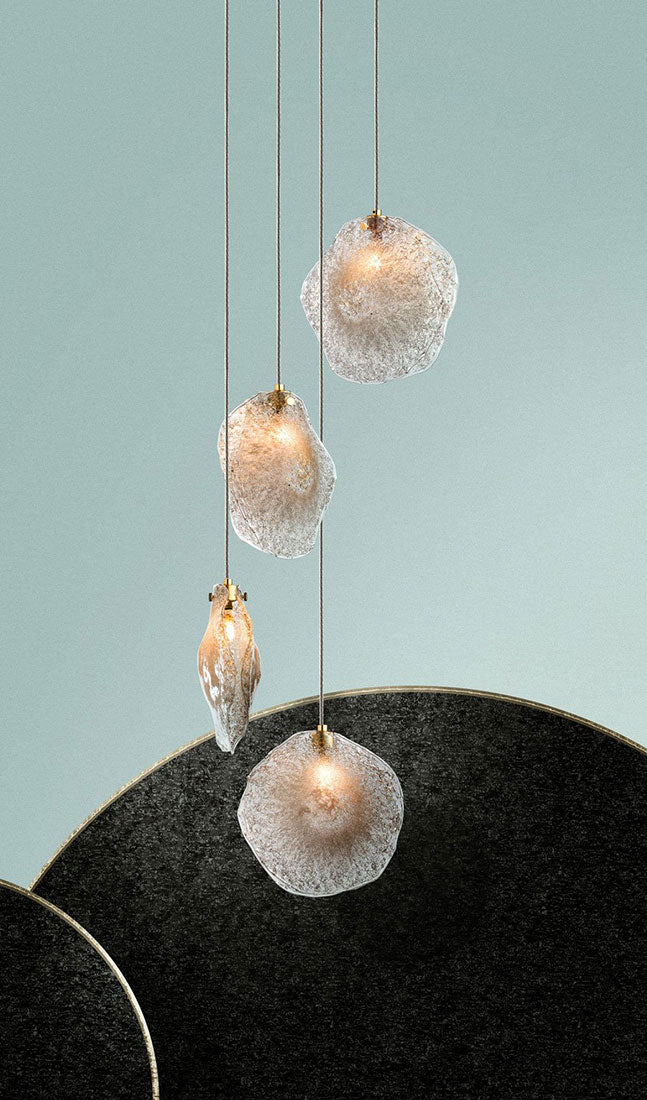


For decades, the curation of a luxury home followed a predictable formula. Fine art belonged on the walls, sculptures occupied pedestals in the corners, and the ceiling was treated as a passive, white plane designed to host recessed downlights or a standard, functional fixture. Wall space was prime real estate, meticulously mapped out by interior designers and art consultants to showcase paintings, photography, and tapestries.
Recently, a structural shift has occurred within premium residential architecture. Modern luxury homes increasingly feature expansive floor-to-ceiling windows, minimalist plaster finishes, and open-concept layouts that prioritize panoramic outdoor views. While these architectural choices flood interiors with natural light, they dramatically reduce the physical wall space available for traditional fine art.
Faced with fewer walls but higher ceilings, discerning homeowners and visionary designers are looking upward. The ceiling is no longer viewed as an overlooked structural necessity; it has become the fifth wall. By shifting their fine art acquisitions from canvas to custom, handcrafted luminaires, high-end homeowners are transforming architectural voids into immersive gallery experiences.
The Spatial Realities of Modern Luxury Architecture
To understand this design evolution, one must examine the spatial constraints of contemporary estate design. High-end residential architecture favors volume, transparency, and flow. Great rooms with double-height ceilings and sweeping glass facades eliminate the traditional drywall boundaries that once hosted framed art.

When floor-to-ceiling glass removes traditional canvas wall real estate, the ceiling emerges as the ultimate canvas for fine art expression.
Placing a large painting on the few remaining interior walls can sometimes make a minimalist room feel fragmented or cluttered. Furthermore, direct sunlight from expansive windows exposes delicate oil pigments and paper works to UV degradation over time.
According to conservation guidelines published by the Smithsonian Institution, controlling light exposure is a critical factor in preserving the physical integrity of traditional fine art assets. Handmade glass and metal sculptures, by contrast, are completely impervious to solar fading, making them uniquely suited for sun-drenched architectural spaces.
Spatial Design Matrix
| Spatial Challenges in Luxury Design | The Sculptural Lighting Solution |
|---|---|
| • Minimal wall space due to floor-to-ceiling glass layout | • Utilizes the expansive, open ceiling plane effectively |
| • UV degradation of canvas pigments and sensitive materials | • Immune to sun fading, solar discoloration, and ambient heat |
| • Static, single-dimensional viewing constraints | • Dynamic, multi-angle, and immersive spatial experience |
By utilizing the ceiling plane, homeowners can introduce large-scale artistic expressions without sacrificing panoramic views or obstructing the clean lines of their architectural layout. A suspended glass installation fills the vertical void, bridging the scale gap between a towering ceiling and the human-scale furniture below.
From Utility to Functional Sculpture: Defining Art Lighting
The distinction between a high-end consumer appliance and a piece of commissioned art lighting lies in the methodology of creation. A mass-produced luxury fixture focuses entirely on uniform illumination and repeating a standardized design trend. A custom lighting sculpture focuses on narrative, material honesty, and the manipulation of spatial atmosphere.
When fine art moves to the ceiling, it gains a dimension that wall-bound art cannot replicate: it becomes an active light source. Glass acts as a dynamic medium that reacts continuously to its environment. During the daytime, hand-shaped glass elements catch changing natural light, casting soft, painterly reflections across the room. At night, the internal light source activates the sculpture, throwing complex patterns of refraction and shadow across the architecture.
This dual nature ensures the installation remains engaging across a twenty-four-hour cycle. It ceases to be an object you merely look at; it becomes an environmental installation that dictates how every other texture, fabric, and surface in the room is perceived.
The Optical Sophistication of Textured Glass
The shift toward ceiling art has fueled a renaissance in artisanal glassblowing techniques. Flat, industrial glass allows light to pass through cleanly, which can often result in an uncomfortably sharp glare. True lighting art relies on heavily texturized, variable-thickness glass to transform light into a soft, layered medium.

Artisanal textures turn standard illumination into complex patterns of refraction and soft shadow play.
When light passes through hand-worked glass, the internal variations act as microscopic lenses. Research from the Lighting Research Center indicates that diffusing light sources through irregular surfaces reduces glare while maximizing visual comfort and emotional well-being within an interior.
Glass Texture Typology
| Glass Style | Artisanal Technique | Visual and Spatial Effect |
|---|---|---|
| Dimpled | Hand-pressed while in a molten state | Ethereal, cloud-like wisps of shadow and soft boundaries |
| Drizzled | Silky glass ropes spun rapidly by hand | Concentric, shimmering light paths with deep visual complexity |
| Mesh Perforated | Delicate surface piercing and manipulation | Dramatic, speckled shadow patterns across surrounding walls |
Each unique texture profile manipulates light differently, allowing homeowners to select an installation that complements the specific mood of their architecture. Whether seeking a dramatic, high-contrast shadow play or a smooth, velvety ambient glow, the glass itself becomes the brushstroke that paints the room.
Customization as a Fine Art Commission
When a collector acquires a painting, they are purchasing a finished, immutable object. They must find a space where its dimensions and colors happen to fit. Commissioning a custom lighting installation reverses this dynamic, allowing the artwork to be tailormade for the structural realities of the home.
Artisanal lighting design functions as a true collaboration between the homeowner, the architect, and the master craftsman. Studios like Shakúff Luxury Lighting treat the design process as a fine art commission, ensuring that every element of the final piece is built to integrate with the home’s specific layout.
Homeowners can explore varied material narratives by reviewing fully customizable collections. For instance, the Nimbus Collection offers an ethereal, cloud-like presence through glass orbs that are dimpled carefully by hand over hot flames. Collectors seeking a nod to mid-century modern design can opt for the Mod Collection, which features delicately perforated spheres that cast dramatic, speckled shadows across a room. For projects requiring an iconic, energetic statement, the Halo Collection utilizes a unique double-glass technique flattened into luminous disks filled with internal drizzled glass fibers. This extensive level of personalization across colors, hanging depths, canopy shapes, and bulb configurations ensures that the resulting sculpture fits its architectural frame flawlessly.
Elevating Specific Architectural Zones
Different areas of a luxury estate demand distinct scales of artistic intervention. Moving art to the ceiling allows for tailored solutions that elevate the functionality and emotional tone of each space.
The Grand Foyer: Setting the Architectural Narrative
The entry hall provides the critical first impression of a home. A multi-story stairwell or a grand foyer with soaring heights provides the perfect canvas for a cascading, multi-pendant sculpture. Suspended on ultra-thin cables that seem to disappear into the ceiling, a massive cluster of hand-blown pendant lights can descend through the vertical void like a frozen waterfall. This arrangement draws the eye upward, immediately communicating a sense of luxury, scale, and artistic intent the moment a guest steps through the door.
The Dining Room: An Intimate Canopy for Connection
In a formal dining space, the ceiling installation serves to ground the table and create a sense of intimacy. Instead of a single, centered light source, high-end designers opt for sprawling, asymmetric canopies or linear waves that track the length of the furniture. By layering different glass shapes and color gradients, such as combining smoky grays, warm ambers, and clear glass tones, the fixture creates an artistic canopy above diners. This localized illumination fosters a warm, enclosed environment that makes long evenings of conversation feel deeply comfortable.
Spatial Application Framework
| Architectural Zone | Visual Goal | Recommended Configuration |
|---|---|---|
| Grand Entryway | Vertical movement, volumetric scale, and initial drama | Cascading, multi-tier staggered clusters |
| Dining Room | Intimacy, focal warmth, and horizontal balance | Linear waves, asymmetric drops, or layered canopies |
| Great Room | Volumetric filling, architectural softening, and texture | Open, sprawling multi-point geometric configurations |
Longevity and the Investment Value of Fine Craftsmanship
In an era where home automation systems and electronic finishes become obsolete within a few years, handcrafted glass and premium metals retain their timeless relevance. Investing in bespoke ceiling installations aligns with the core principles of sustainable, permanent luxury championed by organizations like the U.S. Green Building Council.

Bespoke glass sculpture transforms the fifth wall into an active, luminous art installation.
A hand-blown glass sculpture does not degrade, lose its structural integrity, or fall victim to changing technology cycles. Materials like high-purity brass, solid wood, and hand-finished irons develop a beautiful, rich patina over decades, increasing the character and soul of the piece as it ages.
Furthermore, these installations carry an emotional and physical permanence. If a homeowner decides to transition to a new property, a custom chandelier can be systematically cataloged, dismantled, and reconfigured to fit the proportions of the next residence. This long-term adaptability transforms the purchase from a temporary decorative accessory into a lifelong asset and a generational household heirloom.
Transforming the Fifth Wall
The decision to allocate an art budget to the ceiling represents a deeper understanding of how modern spaces are experienced. True luxury is not about filling a home with expensive, disconnected objects; it is about creating an environment where architecture, light, and material artistry live in total harmony.
By treating the ceiling as a vast, open canvas for sculptural light, high-end homeowners are breaking free from the traditional boundaries of interior decoration. They are ensuring that their living spaces are illuminated by objects that carry human narrative, exceptional craftsmanship, and timeless artistic value.
If you are ready to reimagine your ceiling as a magnificent canvas for custom, fine-art sculpture, the design consultants at Shakúff are prepared to help you realize your vision. Explore our bespoke custom chandeliers and handcrafted installations, or contact our specialized studio team today to begin co-creating a singular masterpiece designed specifically to illuminate the architecture, scale, and soul of your home.